11/19/14

The Fourth Hour


We observe 24 hours in one day, and as a human collective we tend to stereotype certain hours toward certain activities. Work starts at 9AM, ends at 5PM. We eat dinner around 6PM, stay at the clubs until 2AM, enjoy a spot of tea at 4PM. Some of us enjoy certain times of day over others. For example, larks enjoy 5AM to energize their day with a power walk. The aforementioned English may look most forward to 4PM for their tea break. Ghost hunters favor the devil’s hour of 3AM for their investigations. On the contrary, commuters will dread the hours of 6-8AM (and 5-7PM) due to the crowds and congestion of rush hour. And as a general human collective we devote the hours of 2-5AM to sleep and nothing more.


Except me.


I am the very definition of a night owl. I see midnight the way most people see 8PM, the time when the night is just getting started. There is a magic to the dead of night, a mystere if you will. It is a time when very few are out and about. Roads that are usually congested beyond hope are conveniently clear. Bees and other pests are nowhere to be found, replaced by harmless crickets and fireflies. Establishments open 24 hours are much more peaceful, lines nonexistent. Artificial light does its best to illuminate the world that we usually see by sunlight, sometimes exposing things that are otherwise overlooked. And for all you tech junkies out there, the lack of demand during the overnight hours give you the most optimal Wi-Fi speeds you’ll see all day.


Every night hour tells a story. Midnight is the celebration, the start of the night and the start of a new day. 1AM continues the party and is the prime of the night. By 2AM things begin to slow down, as the so-called ‘night owls’ give up and turn in. Through the course of the hour the world becomes emptier, until 3AM when only the true owls remain. The 3AM hour is when we rule our roost, enjoying the world we’ve inherited. There is no turning back at this point, we have truly embraced the night.


Then comes the fourth hour.


Few people make it this far. By 4AM, things start to glaze over. As ultimately diurnal beings, even we owls know when things have gone further than probably intended. The sky is as dark as it will ever be. Whatever spurts of energy we may have felt the past few hours are now starting to wind down, and things start to take on a different sight and sound. The specter of sleep starts to slowly take over, but the magic of the night keeps us conscious. It’s almost a high. Dare I go as far to say it’s a naturally psychotic experience. 


This is my favorite hour of the day, the hour when reality seems the least real. Anything seems possible, somehow. Rules start to lose their meaning, because at this point there’s no one and not much to govern. It is a lonely hour, but a time when you can get in touch deeply with yourself. And yet as alien as the hour makes life, that same life still exists. You don’t actually go anywhere, but at 4AM you feel as far as you can be. Again, few people experience the fourth hour, but for us that do, it’s almost better that way.


Depending on the time of year, the fourth hour ends in different ways. In the summer, the hour is quickly ushered out by the start of dawn, an abrupt end to the night that brought you such dark solace. In the winter the night does continue, but society begins to resume as well. Roads repopulate, businesses reopen, and suddenly the night is no longer yours alone. Even if it’s still dark out, by 5AM the magic of the night has fully faded away. There’s not much left to do, except perhaps succumb to the specter.


Pick a time of the day that you understand the most, be it 4AM for me or noon for you. Feel it, question it, but most importantly enjoy it. It’s the one thing you will always have, without fail, every single day. Claim that moment for your own. Do something special at that time, or reserve that time for inner peace. Though our expiration is a definite, the time we have left is a constant. But blink and you miss it. Don’t lose your personal moments in the shuffle, and don’t ignore the value and emotions our favorite hours can bring. Enjoy them every day you have.

11/16/14

Forgotten Gaming- Bust-A-Move


Name- Bust-A-Move
Platform- NeoGeo MVS (Arcade), NeoGeo CD
Developer- Taito
Released- June 1994


Arguably one of the most popular arcade games in the US next to Ms. Pac-Man, Bust-A-Move is a 90s arcade staple. This game (and the series it spawned) is known more by its original Japanese name of ‘Puzzle Bobble,’ but I’ll refer to this game by its American renaming simply because… I’m American. The name ‘Bust-A-Move,’ though completely inappropriate for what this game actually is, somehow still sounds right. Maybe because we’ve grown to accept it for the past 20 years, who knows…

Bust-A-Move is actually a spinoff from an earlier game known as Bubble Bobble. In that game, you controlled a green dinosaur in single-screen platform stages, and rid each stage of enemies by blowing bubbles onto them and then popping them. (Gotta love Japan.) In this context, the Bust-A-Move spinoff makes a whole lot more sense, as here you’re in control of the said dinosaur(s) and popping enemy-filled bubbles in an effort to clear the screen. 


Don't tell me you've never seen this game before.


That’s really all there is to it. There is no story or exposition whatsoever, not even a text box, and that adds to this game’s strength. Any story they could have shoehorned in would have been unnecessary and otherwise horrible. You control the launcher at the bottom of the screen, and aim randomized bubbles at the playfield. Matching at least three of the same color will pop the bubbles. Match colors and pop bubbles until no more remain. We don’t know why we’re doing this, but we also don’t care. We’re doing it because it’s fun.

After a few bubble launches, the stage will start to shake, and then the ceiling will lower by one notch. Here is where the challenge comes in, since the game is lost when any bubble reaches below the launcher line. Strategy is introduced when you realize you can bounce launched bubbles against the side walls, and bubbles stick to themselves in a hexagonal fashion.


Bank shot off the wall, all bubbles drop off, instant win.


Strategy (and high scoring) continues when you realize every bubble is somehow connected to the ceiling. If you pop a cluster that was keeping another cluster in the air, it will drop off. This is the key to clearing stages quickly and securing yourself on the high scoreboard. For many stages, the trick is to look for weak spots in the bubble setup. Sometimes all it takes is a single shot in the right place to drop off everything with finesse.

Bust-A-Move earns its popularity because it never feels unapproachable. After starting a new credit, a helpful guide line will show you exactly where each bubble will go. Subsequent rounds will remove this guide, but already you will feel empowered enough to make those tricky bank shots using your mind’s eye. After blowing through a few rounds you will feel on top of the world.  Partly because those rounds were intentionally easy, but also partly due to your rising skill. Similar to slot machines, Bust-A-Move allows the player to feel self-rewarded but also keeps the player from exploiting the system.


Dropping combos and it feels so good...


Each of the 30 rounds start off innocently enough, and most of the stages are relatively simple once you find the weak links in the chains. But like every good arcade game, Bust-A-Move’s main reason for existing is to take your money, and take it the game will. Each credit only costs a quarter, but a dedicated playthrough will have you dropping serious bank into the game to get past the several intentionally difficult rounds. Despite this deceit, the player’s skill can still rise, and the mythical ‘one credit clear’ will still feel more and more attainable with each play.

The simple elegance of Bust-A-Move extends from its gameplay to its presentation. The graphics are minimal but quite colorful. Each bubble’s color is well-defined, and your dinosaur avatar (known as Bub) is just detailed enough to convey emotion and overall cuteness. Though the game’s assets never change, the backgrounds change every few rounds to keep things somewhat interesting. They are not animated (save for the penultimate background which scrolls upward) but the backgrounds serve their purpose and do not distract from the gameplay. 


Things can get pretty tight if you let them.


The soundtrack consists of a single song: a relentless earworm you’ll be humming for days, weeks, and even years after playing. Each round starts with a childish chorus saying ‘Ready… Go!’ and each round concludes with a happy jingle ending with the same ‘Go!’ as before. As minimal and quirky as the audio is, it is also absolutely perfect. (As an aside, I’ve been known to use the round clear jingle as my text alert, it’s that endearing.) The music also speeds up when you are close to death, a nice and subtle touch.

Bust-A-Move is one of those games that’s been ported to death, with versions appearing on nearly every console around its launch and sequels/reboots finding their way onto more modern consoles. The original arcade version is still somewhat easy to find; any arcade, bar or pizzeria still holding onto a NeoGeo cabinet is very likely to have Bust-A-Move as an option. All of the home ports were compromised in some way, due to the advanced nature of the NeoGeo, so if you want to play the real deal at home then emulation is your best bet. For those that prefer to play on authentic hardware, you will have to invest in a NeoGeo CD. Curiously, Bust-A-Move was one of the few NeoGeo MVS games not to see a home AES (cartridge) release. Instead it was intentionally released on the NeoGeo CD home platform, to spur sales and interest for the NeoGeo CD. As a relatively simple game, Bust-A-Move translated well to the console, with minimal load times and otherwise arcade perfection.


Can you see what that optimal plan of attack would be here?

However you play it, Bust-A-Move is and remains a classic. Simple enough for anyone of any age to get into, and challenging enough to keep them interested. It’s also a game with absolutely no violence whatsoever, a rare feat in this industry. Find the CD, download the ROM, or pop in a quarter. Whatever you need to do, take a break from today’s tiring gaming scene and enjoy some old-fashioned bubble popping fun. 


Ready… Go!

11/7/14

Forgotten Gaming- Sonic Spinball


Name- Sonic Spinball
Console- Sega Genesis
Developer- Sega Technical Institute
Released- November 1993


1993 was the year of Sonic spinoffs. With Sonic 1 & 2 (’91 and ’92) firmly planting the franchise in popularity, the following year padded the series with offshoot offerings. We saw Sonic Chaos for the GameGear (and Master System overseas), Sonic CD for the Sega CD, Dr. Robotnik’s Mean Bean Machine for the puzzle lovers and finally Sonic Spinball. Ever play the pinball areas in Sonic 2’s Casino Night and wonder what a whole game of it would be like? Wonder no more.


Spinball is a pinball platformer. Yes, you read that right. Four giant, segmented pinball tables with minor platforming elements connecting them, each with their own gimmicks and even bosses. Story is that Dr. Robotnik built a new fortress within a volcano, designed to turn animals into robots (a common trope in Sonic’s early days). To keep out intruders, Robotnik created the Pinball Defense System, aka the aforementioned pinball tables. Unfortunately for him, Sonic curls into a ball quite easily and becomes the pinball, working his way up the fortress to destroy the machines and oust Robotnik.


Rarely does the game look as traditional as this.


Sonic starts out in the Toxic Caves, the sewers under the fortress. From there he enters the Lava Powerhouse that uses the volcano’s kinetic energy to keep things running. Sonic then enters The Machine in charge of roboticizing the animals, and then finally chases down Robotnik in the Showdown while the entire fortress crumbles. I always appreciate when Sonic stages have a flow to them, not just randomly going from grasslands to snowy mountains to casino cities with nothing connecting them. In Spinball you know exactly where you are and why you are there.


Many gamers are divided on this game, as it takes such a specific concept and bases an entire game around it. The physics in this game are also very loose, and Sonic bounces all over the place when all you want to do is shoot him in a specific direction. Many write the game off as unplayable and unfairly difficult, that is until you realize you always have control of Sonic himself. Unlike traditional pinball where you are at the mercy of the flipper and maybe a tilt or two, in Spinball you can always use the D-Pad to nudge Sonic in whatever direction you need. You still need to use the flippers to get him in the general direction, but in the air you can adjust his trajectory. This really sets the game apart from other pinball adventures, and really hasn’t been seen since.


Collect all emeralds on each table to face the boss.


The other thing that makes Spinball unique and interesting (even 21 years later) is its audiovisual presentation. Spinball was made by an all-American division of Sega known as the Technical Institute, or STI. STI wasn’t the most prolific studio, but all of its games (Kid Chameleon, Comix Zone, Sonic 3…) were renowned for their edginess. No games looked or sounded ‘cooler’ and ‘mature’ as theirs. They exploited the Genesis’ darker color palette to create games that were colorful yet very moody. They also exploited the Genesis’ rough sound capabilities to make music and sound effects that were overly crunchy, almost snarling. Essentially all of the console’s shortcomings became their advantages. If you needed any proof to argue the Sega Genesis was the ‘cooler’ console than the Super Nintendo, STI’s games gave you all the ammo you needed.


Thus, Spinball is one of the darkest and edgiest Sonic games in the series. The music, though catchy, uses very hard synths and minor melodies. The graphics show a game world that simply isn’t a happy, pleasant place: grime drips off of the Toxic Caves, animals are visibly roboticized in The Machine (their skeletons and all), and the game’s bosses are completely grotesque. The boss of Lava Powerhouse is a giant boiler containing Robotnik heads, and each time you hit a head it pukes lava. And yet all of this never comes off as shock value, or as the developers trying too hard. In a twisted way it’s almost tasteful. The subtle imagery combined with the sinister music makes Spinball a game that is borderline frightening, especially when you’re only 5 years old playing this for the first time! And my generation came out just fine, much better off than the sanitized, politically correct generation succeeding it.


Everything that made the 90s awesome, all in one picture. Let's boogie...


One can’t talk Spinball until they mention the other ‘main character’ of the game, the Status Strip. Like many pinball games, Spinball always shows a strip on top of the screen showing basics such as your score and balls remaining. But it also reacts to what’s going on in the stage: offering you clues, praising your achievements, and even deriding your mistakes. As the game goes on the Status Strip takes on a personality of its own, with text color changes and little icons. In my opinion the Status Strip steals the show, and it’s always entertaining to see what it displays next, and how. It’s always light-hearted and on your side, and it becomes your best friend in this otherwise intimidating, unfriendly game.


In conclusion, Sonic Spinball is an infamous Sonic spinoff that gets a bad rap by people that simply don’t know how to play it. It isn’t always the easiest game, but it’s not the unplayable mess that many make it out to be. It’s also a rare glimpse at a Sonic game that embraces a mature slant in the proper way, through solid atmosphere, sound direction and theming. It’s a game that simply makes you feel cool when you play it. That kind of thinking helped the Genesis back in the 90s and it’s a fun feeling to relive today.


Dash away to a simpler time, when games used to be fun.

11/2/14

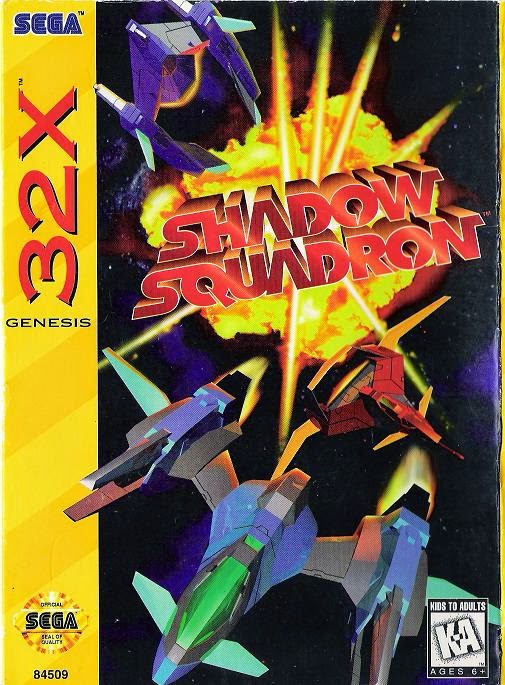
Forgotten Gaming- Shadow Squadron


Name- Shadow Squadron
Platform- Sega 32X
Developer- Sega
Released- Mid-1995


The poor 32X. It was conceived and marketed as Sega’s second pillar for the 32-bit generation, a cousin to the superior Sega Saturn. The 32X was the Sega Genesis’ second major add-on, and was designed to extend the life of the Genesis, as to not alienate its solid userbase as newer, more powerful consoles were being released. In Sega’s perfect world, the Saturn would dominate and the 32X would tag along, even if it was just for a few years. 


Unfortunately the Saturn did not set the world on fire, and a brash decision was made by Sega to discontinue everything and throw its full weight behind the Saturn, hoping the newly-freed resources would make the Saturn a more viable platform. Hitching themselves completely to a falling star made no sense then, and makes no sense now. Nothing would have made the Saturn better save for different hardware, which no amount of software resources would be able to fix. To Sega of America’s chagrin, Sega of Japan made the final decision and the Genesis, SegaCD, GameGear and 32X were all unceremoniously killed in 1996. 


Why am I saying all this and not talking about the actual game yet? Because the 32X was a much more capable piece of hardware than anyone gave it credit for, and Shadow Squadron is one of the best examples of what the 32X could do.


Still photos do not justify how cool and effortless these hyperspace scenes are. 


Shadow Squadron is a fully 3D space sim/shooter. Like virtually every title in the 32X library, development time and costs were tight, and the game was rushed out the door. Thus we have a game with few play modes, only 6 stages and very little else. Given more time and love, Shadow Squadron could have been a deep and engrossing experience, right up there with fellow Saturn and PlayStation games. But as it is, the game is little more than an arcadey proof-of-concept.


But I’ll be damned if this isn’t an extremely fun game to play.


Each orange ship is an enemy target. Blue dots are optional enemy fighters. Good luck!


After a hyperspace cutscene and mission briefing, each stage plops you into deep space along with several enemy battleships. Your job is to take all of these massive ships down. Yes there’s a paper-thin story, but in this arcade-like setup it is irrelevant. Between these ships are the occasional asteroids and a few small enemy fighters, though they are usually optional to take down also. Destroy everything noted in the briefing, and you hyperspace to the next stage. It’s very simple stuff.


Each enemy battleship is like a puzzle. Granted you could just fire at it randomly and it will explode eventually, but the real fun is in finding the weak spots. Certain pieces of fuselage are more prone than others, and if you find a super-weak spot you could take the whole ship down almost at once. The game gives you such an absolute freedom of movement that you are encouraged to approach these ships at any angle and inversion to take them down most efficiently.


Feel free to tackle this ship however you see fit. The choices are all yours.


And that is perhaps what makes this game so… fun. You can see anything from any angle, and go anywhere you want. Open-world games are taken for granted nowadays, but with a game as primitive as this you expect limitations. Shadow Squadron has none. Playing this game feels so liberating, almost joyous. All the game says is ‘destroy this thing,’ and gives you every freedom to do it the best way you see fit. And you do. And you keep doing it for 6 stages. You'll fail until you finally beat the game. And then you'll play it again one day, and remember how much fun it is, and it will become your new mini-obsession until you beat it again. This kind of adrenaline is what I thrive off of, and it's my life's mission to share it with you, the reader.


It's called nostalgia. And it’s an amazing feeling.


There's such a simple elegance to these kinds of graphics. Abstract yet effective.


As for graphics, I hope you like flat, non-textured polygons. I’ve always loved this style, as it’s so fledgling and experimental. Everything is clean, sharp and defined. No textures that could get muddy, no complications to distract you. Plenty of color though, cycling through their palettes and imitating flashing lights, finding every color the 32X was able to render.


Music is provided by the Genesis, as the 32X didn’t help much in the sound department. Each stage has its own theme, and at this point in time Genesis chiptunes were as sophisticated as they could be. The music is quite catchy and has even found its way into other fan-made games, notably Sonic Megamix.


Massive sprite explosions, random flying triangles, silky smooth framerate, what's not to love?!


The game has a 2-player co-op feature, where one player is the pilot and the other is the gunner. I’ve never had the pleasure of trying this mode with someone but I could imagine it’s good fun if you’re both skilled and in the mood. There are two different ships you can play with, each with their own unique play styles and abilities. One of the ships also allows you to play on-rails, where all you do is shoot as the ship flies in a fixed path, but this surprisingly sucks so much fun out of the game. Thank goodness it’s merely an option, though it’s still fun to explore out of curiosity. 


The 32X was tongue-in-cheek marketed as ‘a poor-man’s entry into 32-bit gaming,’ and that’s exactly what this game looks and plays like. To its credit, the 32X holds nothing back from this game, and allows it to do and be what it is, with no compromises. The only thing that held this game back from being more was its development time and general apathy toward the 32X in the first place, which is a shame. With more games as technically impressive as this, and a lot more love and support from Sega, the 32X could have held on for longer than it was allowed. But at least we have Shadow Squadron, and with it we could at least have a fleeting glance at what kind of future the 32X could’ve had.

10/15/14

The Trouble with Taj


If a tough decision isn't made soon, the Trump Taj Mahal will become its namesake: a giant tomb.


I write this from room 6804 in the Chairman Tower of the Taj: a beautiful accommodation up there with Borgata, Golden Nugget and ex-Revel. A room also given to me for two nights, completely free. (Barring taxes, but you can't avoid those or death.) This is at least my third time at the Taj on their tab, as they've been giving me free weeknights since September. High roller I am not: I only received a TrumpOne (loyalty) account last year from a single visit. Now a full year later I'm getting every single weeknight for Fall 2014 for free? With possible upgrades?! And slot play??!


Something is definitely not right here. The Taj is hurting, and bad.


Macabre as it sounds, I compare Trump Plaza and Taj Mahal as the Twin Towers on 9/11. The Plaza has already been closed (i.e. the south tower is down) and these past few weeks have been like the half hour where the north tower stood alone. The Taj is still here, existing somehow, while its Plaza twin has met its fate. All eyes are on the Mahal, the proverbial north tower, hoping it survives but ready to watch it fall.

It may as well have a giant hole in it too, bleeding money.

I honestly did not think the Taj Mahal was in such a bad position. Sure, we all knew the Plaza was going to hell in a handbasket, but the Taj was different. It was the Borgata before the Borgata was built. It might not have been top dog any longer, but come on, it was the Taj! It was the resort for Trump Entertainment Resorts to fall back on, their only existing property. Its Chairman Tower had just opened in 2006, made a big splash by recently opening Scores, and always had the Steel Pier right across the boardwalk. They even changed their logo to keep up with the times. (Those whitewashed minarets and elephants always had to go, though.) With the Plaza's closure, one would think the Taj could buoy itself, and the surviving resort was relaunched as the secure 'new home' for displaced Plaza patrons.


The big question is: How could Trump ER have messed up so badly these past few years??

Back when casinos didn't mind having a garish theme.


Much more contemporary. My millennial mindset greatly prefers this.


Finger-pointing aside, here's the quandary the Taj Mahal faces currently. The resort cannot support itself any longer, and for months has been cruising on loans that will never be repaid. This is it, it's done. For the Taj to still exist, billionaire investor (and now owner of Tropicana) Carl Icahn will agree to buy it for $100 million and keep it afloat. IF... and only if... the workforce (mostly unionized) past and present agree to relinquish their health and pension plans. Such a move would be disastrous to the hotel/casino workers, whose pay rates barely cover basic living expenses. The perks on insurance and pension were the main draw for working there in the first place, and for staying there for decades. Again, it's that feeling of security that the Taj projected that is quickly unraveling. If no agreement is met, Icahn backs out and the Taj is left to die, closing as soon as possible. As for Donald Trump himself, he's stated he's 'looking into' possibly saving his former pet projects on the boardwalk, but it's all talk. His name was physically removed from the Plaza last week, why would he suddenly start caring again? And what, put the letters back?


Either the Taj Mahal stays open through the graces of a man with way too much money, with its employees eating dirt, or the place closes and all the jobs are lost. Another hulking monstrosity will stand empty in a distressed city's tourism district, and even more morale will be lost. But if the Taj is granted permission to back out of its union contracts, it sets a very bad precedent that the other casinos could easily follow. I'm sure Caesars would love to cut some corners, as suddenly now they may also be on the verge of bankruptcy, if the analysts are to be believed. Not to mention it will make a single person, already worth billions, just a little bit richer while thousands of working-class employees suffer even more. It's the very definition of cutting off your nose to spite your face, from both sides of the issue.

Just wrong enough to be right. All of that gold, my god...

While neither option is inherently good, I think the right decision is the one that supports the best future for Atlantic City. In less than a year, the city has lost a legitimate fraction of its casino force, aka its major source of income. Closing the Taj will not help those matters, and displace even more gamblers who may not even return to the city again. Perhaps AC did not need 12 casinos, but it should comfortably be able to support eight. Three in the marina, two midtown, one downbeach and two uptown. Speaking of uptown, with no Mahal the boardwalk would be effectively dead from Resorts northward. A solid chunk of Atlantic City would be a ghost town; they may as well end the boardwalk right there. Icahn should stop worrying about millions when he has billions, purchase the Taj as it is, and leave the union contracts in place. Perhaps even merge the corporate interests of the Taj and Tropicana, helping to strengthen and unify the new bookends of the boardwalk, and give the casino district a shot at staying alive.


My opinions aside, the final verdict from the judge will come in soon. To be perfectly honest, I don't think it's looking good.

Grand Opening 1990. The year the Taj entered the world, as did I.

10/12/14

Slot Machines in Shopping Malls


Just hear me out on this one.

I’ve gone into detail about the ravaging of Atlantic City, and solely blamed the city itself for the problems it sees itself in currently. (see previous post: The Atlantic City Problem) However it isn’t the city alone that is hurting. The gaming parent companies that own casinos down there (Caesars, Trump, Boyd… well maybe not Boyd, the Borgata’s doing quite well for itself) are having difficulties keeping their heads above water. Insert ocean pun here. 

Caesars Entertainment shut down the Showboat purely because it didn’t feel like maintaining a fourth AC property, preferring to funnel that money into Caesars, Bally’s and Harrah’s. Trump Entertainment Resorts... well we all know how horribly they’ve kept up with the Plaza and Taj Mahal, practically using their time-warped interiors as the selling point. Now that the Plaza is gone and Taj is pulling a Revel (“Oh, we *might* be closing soon,” when the writing is on the wall), the only thing that can save Trump ER is Donald Trump himself, and he might just do so.

And let’s touch upon the Ghosts of AC Past. Playboy/Atlantis flat out went bankrupt in the 80s. Hilton pulled out of gaming completely, selling its interest in the Atlantic City Hilton and the Las Vegas Hilton (consequently renaming each as ACH and LVH). ACH was later reborn as the Atlantic Club, the first AC casino catering to locals. An interesting premise that could have worked out, but simply put, it didn’t. They were the first to close this year, back in January. Sands pulled out of AC years ago, closed and imploded its casino, and sold the land to Pinnacle Entertainment which was to build an all-new megaresort on the site. They never did. And poor Revel Entertainment… they really tried. They made glaring mistakes all the way through, but still pressed on with a smile. But smiles don’t pay the bills.

The rest of the pics in this post are actual times when luck smiled on me. Even if it really wasn't much.

So as one could imagine, gaming corporations can run into financial problems easily. For Atlantic City properties, they run into those problems very easily. So how can they build back a little bank? It’s simple: take more gamblers’ money. Increase that house edge. And really hope some guy doesn’t hit the progressive jackpot. As today’s gaming climate shows, casinos are no longer the kind of venue you’ll only find in two or three cities in the whole country. They are everywhere now. Racinos, Indian reservations, riverboats, cruise ships, and the Internet are just a few places country-wide you could play a legal game of chance. Atlantic City can still be a gaming hub, along with Las Vegas, Reno, Detroit and lately Philadelphia. However there is no denying that casino atmospheres do and continue to exist between these cities. 

For our friends up in corporate to survive, we'll need to start seeing casino-like amenities as ubiquitous as retail stores and restaurants, starting with AC's home state (and shopping mall central), New Jersey. “Oh that new mall?” people in the year 2030 will say, “Yeah it’s great! It’s got an Armani Exchange, an IMAX theater, a Cheesecake Factory, and a Caesars Lite.” Or they will say, “Did you hear they’re going to put a Tropicana Express in Bridgewater Commons? Yeah, it’s taking the place of that old Radio Shack.” These would be slot parlors, no more than 50 machines to a location, offering slots, video poker, and perhaps virtual table games. By no means will these places be large, as keeping them small would be the key to success. Those old Sears and Fortunoff anchor buildings will have to find another use.

Owned by the gaming parent companies themselves, they would mostly blend in with other storefronts, much like mall arcades did in the 80s. Nothing super flashy or excessive, and not bleeding out into the mall proper, just a tastefully designed room with a smattering of games inside. Well lit, with clocks, and noise kept in check. No comps, no cocktails, and no super jackpots. But they would have extensive advertising for the parent company’s closest casinos, perhaps even incentives (slot play, free buffet) for those specific properties. These would not be casinos in the traditional sense. They would be merely a place to kill time and have a little fun, akin to a lounge. Bets would be kept minimum, no high rolling and no way to lose your life savings on a single hand.

Suppose the wife is trying on a million pairs of shoes and you couldn’t care less to watch. Don’t go to the Cinnabon and gorge yourself, spend that $5 on a few virtual blackjack hands, a dollar a hand. “Honey I’ll be over in Caesars Lite.” “Okay, meet you there soon!” See how natural that sounds? You were going to spend $5 anyway, why not use it to flex your brain (because blackjack does involve strategy) and possibly win enough money for lunch? And if you don’t, big deal. It’s just lunch.

Credits. Not dollars. Quarters. Oh well.

So how in the heck would these not-casinos make any money? With minimum bets, no familiar trappings and an overall lack of draw, it sounds like I’m shooting these places in the foot. But look at it this way: small storefronts minimize rent. Complete automation (no physical dealers) requires few employees. Being in concentrated population centers will guarantee that the parlors won’t go unnoticed, even by being discreet. And do you know how many millions casinos take in, even when they’re performing poorly? Gambling naturally rakes in a ton of money, so even if these parlors take in only tens of thousands, it will still be more than enough to cover the overhead. There will always be someone playing, that is a natural certainty.

Overall with these places, less will be more. Think of these slot lounges as demos for the major casinos. With their decor, you get a taste of the ‘real’ Golden Nugget, the ’real’ Harrah's. Authentic games but slightly limited in how much you can play. They would be ideal for nervous newcomers to practice and learn. The brochures and promos would entice people who are enjoying themselves to enjoy themselves even more at one of the actual resorts, drawing them to (in this case) Atlantic City. That’s where the casino companies will make their money, in their flagships. The offsite slot parlors would act essentially as a giant PR liaison.

Like video game demos for example, some people are more than content to just replay the same one level over and over again, never actually buying the game. Likewise, some players will be just fine playing in Mini Bally’s, never actually visiting Bally’s proper. And that’s fine! The customer is happy and Caesars Entertainment still gets a little revenue out of it, from a person that they otherwise never would have. It’s a win-win.

“But these places will defile otherwise wholesome family venues!” the naysayers will say. “Gambling will bring hookers and bums to the mall, and innocent shoppers will squander their money. The children will be corrupted by the mere sight of these parlors, and people will turn violent as they lose more and more! Mainstream gambling will be the dearth of society!” Cool your jets and let me counter:

Casinos do have a reputation of introducing seediness. Ok fine. Giant buildings designed for vice can have that side-effect. But a dozen or so slot machines in a former Foot Locker? Do you really think a row of Double Diamond Deluxes (fixed at a quarter) is going to bring in the wackos off the street? With prostitutes turning tricks behind the bill breakers? Come on. Second, the mall patrons were going to squander their money on overpriced items anyway. Third, by introducing (in a way) casino games to children, it will desensitize them once they get old enough to play. Or it will interest them, and by being exposed to it, they will play responsibly due to the lack of novelty. (You will still need to be 21+ to play, and with ID swiping and in-slot webcams, the rules can still be enforced.) Gambling is no worse than the alcohol they constantly see at family parties, restaurants and on TV commercials. It’s just another adult activity. Finally, if someone goes ape and starts shooting people because they lost a game, I don’t think the slot parlor is to blame.

Five minutes of unadulterated spins would've netted me $165.26 if they actually counted.


It would also help to put these slot lounges in more affluent areas. For some reason, casino companies love to put their resorts in impoverished, washed out areas. Detroit, Atlantic City, now Queens, the Mississippi River... And they wonder why undesirable people keep hanging around, gee what a mystery. Why not put these gambling halls in rich areas? I never understood that. Put a Caesars Lite in The Mall at Short Hills, where a mere T-shirt will set you back $100. Put one in Garden State Plaza, the Forrestal Village, places that should charge a cover fee just for entering. Casino companies keep advertising rich-looking people, and offer over-the-top luxury to those that qualify. Yet they cater to the lowest common denominator. If the beautiful people with disposable income are your target audience, go to them! 

There will also be a little thing known as legality that will have to be played nice with... But with the recent legitimizing of sports betting, online gaming, and just Atlantic City's casino existence in the first place, the first stones have already been cast. The city and the state are running out of options fast, and it's time for fantastical ideas like this one to be looked at. They want to put casinos in the Meadowlands and Jersey City, great let's just build even more billion-dollar infrastructure that will make everything much more complicated. Instead they could just shell out a couple hundred thousand and put Micro-Borgata in Short Hills, promoting Atlantic City as the 'full version.'

Mainstream gambling will be the savior for the gaming companies and the overall industry. Use alcohol as an example: drinks are everywhere. It’s an exclusively adult activity, and many adults enjoy it responsibly. Yes there are some that have to buck that trend, but they don’t ruin it for everyone else. And alcohol is expensive. People will spend $1000 on a bottle of wine and be praised for it. However, if they bet $1000 on roulette they are considered a fool, even if they win. Gambling is constantly picked on because it can only be done in certain places, and this exclusivity fosters other problems that surround it. But if casino games were as commonplace and accepted as alcohol, would everyone be so quick to shame? Heck, we already have vending machines for lottery tickets set up in supermarkets! Do we see people lining up to feed these machines their paychecks, with beggars and prostitutes loitering outside ShopRite? Of course not!! These machines get menial attention and still rake in serious dough for the state. Somehow the lottery is embraced by society ("Did you get your Powerball ticket yet? The jackpot just hit $500 million!"), and slots are ridiculed ("Aah the odds are terrible. You'll never win!") 

Education plays a big factor here also, as the worst gambling offenders are the ones that know neither what they’re doing, nor the magnitude of their decisions. It’s those that understand the games and the house edge that are able to enjoy them, promoting the responsible use of this kind of entertainment. Current and future generations continue to show a declining lack of interest in gaming, and this is partially because of the inconveniences that surround it. Yet it’s still accepted to spend hundreds on beer and get smashed at college parties, sometimes resulting in a criminal record. Video poker in the mall sounds like a much safer and intellectual alternative now, doesn’t it? And when they go to AC to play with the big boys, at least it'll feel worth it.

The quintessential five BARs. Didn't pay out much but such a perfect lineup is very rare.

Vice is vice, people. It will always be there, because people enjoy it. To support one vice and deride another is silly, especially when the ones that are embraced are deadlier. It isn’t a matter of eliminating the devil (because you can’t), but rather synchronizing with it. Mainstream gambling must be condoned by the public and by politics in order for the industry to succeed. The USA is losing to Macau fast. When the gaming companies thrive, the economies that rely on them (like Atlantic City's) thrive as well. If the whole notion bothers you, then honestly, too bad. Do you want a world without gambling? Move to the moon. You won’t have alcohol, tobacco and casual sexuality there either. And no, your church can't hold bingo or basket auctions to make ends meet. Have fun.