7/31/14

Forgotten Gaming- Sonic Pocket Adventure


Platform- NeoGeo Pocket Color
Developer- Sonic Team/SNK
Publisher- Sega/SNK
Released- November 1999

Many believe that Nintendo’s GameBoy Color ran unopposed in the handheld gaming market from 1998-2001. However that is not the case. SNK, the company that brought the world the acclaimed NeoGeo arcade machine and home console, also tried their luck with handhelds. The NeoGeo Pocket (quickly followed by the Pocket Color) was designed to one-up the GameBoy (Color) in every way, and from a technical standpoint largely succeeded. Featuring a digital control stick (a first on a handheld), impressive sprite capabilities and incredible battery life, the NeoGeo Pocket Color *could* have dethroned the almighty GameBoy. Unfortunately SNK’s daft internal management, combined with a niche game library, destroyed any market potential the Neo could have had. By 2001 the powerhouse GameBoy Advance was on the shelves and SNK was shamed into bankruptcy. So long, Neo.

Although the Pocket Color’s game library was as niche and obscure as the arcade NeoGeo’s, that’s not to say the games weren’t worth playing. The Neo has one of the most solid, quality game libraries you will find, with every game taking full advantage of the handheld’s capabilities. Several games were adaptations of original NeoGeo arcade games, such as Metal Slug and Neo Turf Masters, while others are original offerings such as SNK vs Capcom: Cardfighter’s Clash and Match of the Millennium. The Neo was also oddly prolific for casino games, from slots to poker to baccarat. There’s a lot to like on the Pocket Color, especially one game that unfairly got swept under the rug: Sonic Pocket Adventure.

I love Sonic's sprite in this game, he looks so cute!

Sonic Pocket Adventure released in the same month as Sega’s Dreamcast and its flagship launch title, Sonic Adventure. Despite the similar title, the two games share nothing in common. Right off the bat, it’s a little confusing. Here’s a major Sonic game on a non-Sega console (a first), with a name that echoes Sonic Adventure, looks like Sonic 2 and uses music from Sonic 3 & Knuckles. So what is it? It can’t possibly be a port. And what is this… NeoGeo Pocket what? Ah screw it, I’ll just get Pokemon Yellow for my GameBoy. Neither the game nor the handheld could catch a break. It’s a shame too, because Sonic Pocket Adventure happens to be one of the best 2D Sonic games ever released.

Sonic Pocket Adventure is essentially a ‘best of’ that combines the graphics, audio and gameplay of the Genesis Sonic series into one unique game. It is comprised of six zones of two acts each, along with a final and extra zone. Starting in Neo South Island (a dead ringer for Emerald Hill), the game progresses to Secret Plant (aka Chemical Plant), Cosmic Casino (Casino Night), and Aquatic Relix (Aquatic Ruin) which ends in a cameo of Hidden Palace. After a brief cutscene, the game continues to a remake of Sky Chase and Wing Fortress (awesomely renamed as Aerobase). Lastly you fight Robotnik on his ship, the Gigantic Angel (Metropolis/Scrap Brain) with a final fight in Last Utopia (Death Egg (S&K)). After collecting all the Chaos Emeralds, a bonus zone known as Chaotic Space (Doomsday) allows you to fight the true final boss as Super Sonic. 

Graphics are about two notches above GameGear but one notch below Genesis.

It is important to note that although levels look extremely reminiscent of stages from past games, their layouts and bosses are completely different. This truly is a brand-new Sonic adventure that merely *looks* like past games. By mimicking fan-favorite zones such as Chemical Plant and Casino Night, it almost acts as fanservice, giving players new acts in their favorite tropes. As for audio, all of the music in Sonic Pocket Adventure is adapted from Sonic 3 & Knuckles (with the exceptions of Neo South Island Act1, which is from Sonic Jam, and the Special Stage theme, which is unique). Though the song choices seem almost random (Angel Island music in Secret Plant, Desert Palace’s theme in Gigantic Angel), the songs are remixed beautifully for the NeoGeo Pocket Color’s sound chip. Neo games all have a distinct soundfont, and these classic Genesis tracks sound great through it. Some tracks even take on a completely different vibe, keeping things familiar but refreshing.

Probably what makes Sonic Pocket Adventure so enjoyable is how uncompromised it feels. Yes, the graphics took a major hit in their transition from Genesis to Neo, but everything else is still there. Transport tubes in Secret Plant, slot machines in Cosmic Casino, even the breakaway wall setpiece in Aerobase are all in here, all with the series’ trademark sense of speed. Unlike previous handheld Sonic games on GameGear, Sonic Pocket Adventure really gives you a Genesis experience. Even the Special Stages, which are remakes of Sonic 2’s iconic 3D chute, look and play just as well as the originals, if not better. It also helps that the Neo’s razor-sharp screen keeps the game images crisp, with none of the ghosting or smearing that was notorious on 90s handhelds. 

Liked Chemical Plant in Sonic 2? Well here's some more!

Another place Sonic Pocket Adventure shines is in replay value. With only 12 main acts and two final boss acts, the game itself is rather short. The stages don’t take more than a few minutes to get through, and the difficulty curve is relatively tame. You could blaze through this game within an hour easily. However you will keep coming back for the ‘Rooms.’ At the title screen you can start the game, continue where you left off, or cryptically ‘Go to Room.’ These rooms (read: menus) are extras that extend the life of the game considerably. In the Trial Room you can time-attack stages you’ve beaten. For probably the very first time in Sonic history, you will be ranked on your time taken. However instead of the letter ranks like recent games, you are graded from bronze to platinum. Getting platinum on every stage is no easy task and requires expert memorization of the stages. If a basic time attack wasn’t enough, there’s also the ‘Advanced’ time attack, which only counts a run if you finish with more than 50 rings. Based on the stage layout, this can change your strategies considerably.

The Duel Room hosts the game’s 2-player modes, where you can link two Neos not unlike GameBoys and race head-to-head in either races or ring challenges. Fun, but also obligatory. Lastly is the Puzzle Room, which really sets Sonic Pocket Adventure aside from all the other Sonic games out there. Scattered throughout the game are scores of puzzle pieces (seen in-game as yellow diamonds). Through your playthroughs of the main game, all of the pieces you find go here to be assembled. Completed puzzles show unique stock images of the Sonic crew, fresh with their Sonic Adventure-era redesigns. The puzzle mechanic requires you to explore every inch of every level, in turn having you appreciate how nice the level designs actually are. While speed is always the name of the game, slowing down to hunt the puzzle pieces gives the game a whole second life.

Those scorned by Sonic 4 will be pleased to know the physics here are fully intact.

If the NeoGeo Pocket Color even remotely interests you, you owe it to yourself to also get a copy of this game. It’s a showcase of what the Neo was capable of, and is a fine example of how good extras can give a quick game such replayability. Sonic fans, especially of the classic series, will *love* this game, while those who just appreciate a solid 2D platformer will enjoy  it as well. Of course you can always emulate, which I don’t not condone =P; with the quality of Neo emulators out there today for computers, tablets and phones your experience won’t be compromised. Perhaps this game will do for you what it did for me, and introduce you to the fine library of Neo titles also released. Who said the GameBoy has to have all the fun?


6/21/14

Forgotten Gaming- Sega Rally


Name- Sega Rally Championship
Platform- Sega Saturn (from Arcade)
Developer- Sega
Released- December 1995

Three tracks. Two cars.

And yet with only those will you find a game that almost qualifies as a religious experience.

The original Sega Rally Championship hit the arcades in 1995. Building on the foundations of Sega’s past 3D racers, Virtua Racing and Daytona USA, Sega Rally delivered an authentic racing experience to many a gamer, with its textured polygonal graphics, pumping soundtrack and fluid clip. When the news broke out that a Sega Saturn port was in the works, many were skeptical. The Saturn was not known for its 3D prowess, as lackluster ports of Daytona USA and Virtua Fighter proved. Would a port of Sega Rally even be worth it?


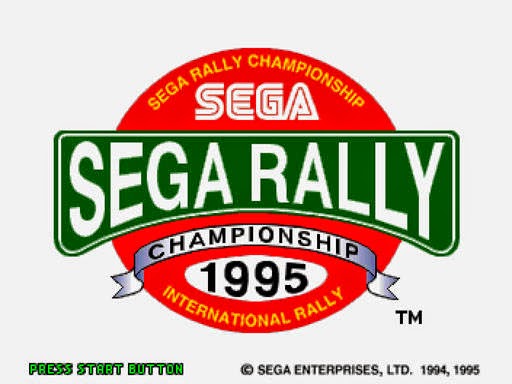
For the Saturn, this looks incredible. Oh and that blue banner reads 'Checkpoint.' You can make it out, right?

Turns out the Saturn port of Sega Rally became one of the closest arcade-to-console conversions the Saturn would receive. Sega Rally became a showpiece for the console, showing off how competent its 3D capabilities were and promised that future arcade conversions could be just as close. At one point the game would be included as a pack-in with the console, or at least represented in the pack-in demo disc. Of course all of this greatness would be rendered moot if the game itself wasn’t fun and solid, but Sega Rally was and remains a hallmark of the arcade scene, and one of the overall finest video games of the 1990s.

Everyone’s first experience with Sega Rally is the same. You innocently start up the championship mode, noticing that you only have two cars to choose from: a Lancia Delta and Toyota Celica. You can choose between models with manual or automatic transmission, but that is it. Two cars. There’s not even an option for a different paint job. Oh well, so you pick one and start racing. The first track, Desert, loads fast and the cars’ high acceleration immediately has you going over 100. All of the track’s turns are announced ahead of time, and you’ll pass a few opponent cars, but mostly you’ll be bumping into the walls. You complete a lap, expecting at least two more to go, but the race suddenly ends. That was it, just the one lap, complete in just over a minute, and on to the next course you go. What a strangely quick-moving game, this is.

Barely two minutes in and more than halfway through the game.

You continue to the second course, Forest, and another exhilarating minute later it too is all over. On to course three, Mountain, where even more fun is had until it too, is over after just one lap. Your total time for all three courses is shown on the screen… and the game ends. That’s it, you’re done. You just beat Sega Rally in under four minutes.

However, you probably placed horribly against the opponent cars, and you barely scraped past the time limits. But you’ve seen almost all of what the game offers. How can that be? How could this game, hailed as one of the greatest arcade and Saturn games of all time, be so loved with such little content?! Confused and aghast, you search the other modes the game offers. Practice mode, time attack, multiplayer race, but it’s all still the same two cars and three courses! You go into time attack (or practice, the modes are very similar) to try to squeeze out any replay value you can. You pick your car and return to the Desert stage.

Now that your best times have been saved, the game suddenly starts to mean a lot more than it did before. Racing on the same course over and over this time familiarizes you more with the curves and how to handle each one. You’ll swear that the game is going easier on you by making the car easier to handle, when in reality it’s you actually getting better at the game. Your checkpoint and lap times continually flash on the screen, showing you by the millisecond how much faster or slower you’re going based on your best times, and it’s a triumph to beat your time even by .01. This game that once felt lacking in content, now feels deep and richer than ever before.

And all this came from just one course and one car! Don’t forget, there are two other courses for you to master, and a whole other car with its own handling to learn also! Suddenly you want to stay far away from the championship arcade mode, as you know you are not yet worthy of putting all these courses and times together, with CPU opponents added in to the mix. As you continue to practice the Forest and Mountain courses, you may begin to question why you play games in the first place, as all you’re doing now is going around in circles and beating your own times, millisecond by millisecond. But what accomplishment you feel from this! There are no achievements, no online anything, nothing but you, the track and the timer. And it’s here that the gamer in you begins to blossom. This is video gaming at its finest. It doesn’t matter how crispy the primitive graphics are, that there’s no storyline whatsoever, or that the game still only has two cars and three tracks. Sega Rally is a test of precision that grooms you into a perfectionist, whether you wanted to be one or not. All for the bragging rights of having the top spot on an offline leaderboard, which is always in danger of irreversible deletion when the Saturn’s internal battery dies.

Behold, Lakeside! A track you may never even be good enough to see.

After days, weeks, months of dedication, you feel you are ready to take on the championship mode and aim for first place against the CPU cars. You try, you fail, and you try again. Eventually, you win. You’ve done it! But what’s this that just flashed on the screen? “Try Extra Stage”?! Without warning the game loads a special, hidden fourth stage, Lakeside. This surprise course is even tougher than the ‘expert’ Mountain stage, and with no checkpoints to give you extra time, more likely than not you won’t even be able to complete a full lap. Try and try again you will, and your prize for winning Lakeside reveals itself: a Lancia Stratos. So I stand corrected. make that four tracks and three cars.

With your bragging rights and Sega Rally mastery, what will you walk away from at the very end? Honestly, nothing. As it is for any video game, the fun is not had in the destination but in the journey. (Speaking of that, any gamer that hasn't played Journey (PS3) is no gamer at all.) Unlike MMOs that have you leveling up to infinity with no real end (until they kill the servers), Sega Rally represents what a true game is at its core and shows how much you can have with so little. Many Saturn games operate on this principle of maximizing minimalism, largely because the console couldn't handle much more. Look at Daytona USA, NiGHTS, Virtua Fighter, Panzer Dragoon... all games and series that honestly don't have much flash and abundance. But what they do have is hidden depth and complexity wrapped up in that signature Sega style. They are games that rely on continuous replay to get your score that one point higher, or time one millisecond lower. It's all for your personal satisfaction and little else, but then again, isn't that why we play video games in the first place?

The reason we game, and replay you shall. Over and over again.

6/10/14

Forgotten Gaming- Knuckles' Chaotix


Name- Knuckles’ Chaotix
Platforms- Sega 32X
Developer- Sega
Released- Spring 1995

Buried deep in the pile of mid-90s console rejects, among the 3DO, Atari Jaguar and Apple Pippin, lies an oddity known as the Sega 32X. As the second of the Sega Genesis’ major add-ons, the 32X was designed to enhance the power and performance of the aging 16-bit system in order to keep it relevant during the 32-bit revolution, led by the Sony PlayStation and Sega Saturn. It was shamelessly considered (and marketed as) the poor man’s entry into 32-bit gaming. Although the idea sounds solid: keeping your old Genesis up to speed with new gaming ideas, but in practice nobody wanted to blow $150+ on an add-on that was already set to be obsolete by the Sega Saturn, which was due to release within a year of the 32X. Fewer than 40 games were released for the 32X and despite a sales spike at launch, the add-on sold horribly and quickly became derided by critics and customers. Trust in Sega had been hurt greatly because of the 32X, and now more than ever it was clear that Sega really had no idea how to handle this next gaming generation. The botched 32X release, followed by the slow crash and burn of the Saturn in the following years, gave Sega no choice but to Cast a Dream =P and try to save face with one last console, but that’s another story for another day.

So here we are with Knuckles’ Chaotix, the only Sonic-related game released for the 32X. Ever since the announcement of the new 32-bit consoles, full-3D Sonic games were teased and hinted at, prepping the gaming public for the 32X (and later Saturn) to deliver these immersive experiences. Imagine their disappointment when a Sonic game finally released on 32-bit hardware and it looked like this:

Welcome to the next... level?

Yeah it looks nice, but where’s the 3D? Where’s the nextgen experience only available  thanks to the raw processing power of these new and expensive consoles? And where the hell is Sonic?

Every detail about Knuckles’ Chaotix’s launch and reception at the time was duly unfair. Few people even bothered with a 32X, and the few that did buy or review the game dismissed it as a spruced-up Genesis game with funky physics and a weird bungee gimmick. Even Sega dismissed this game in later years, never re-releasing it as they have with many 90s Sonic games, and deciding to reboot (most of) the Chaotix characters in new games with different roles.

But instead, look at this game from today’s standpoint. Retro gaming is a continuing trend and hobby, and even as the PS4 and Xbox One trudge forward, many gamers are deciding to look back and discover games from a simpler time. Classic Sonic games are particularly more popular than ever, thanks to their re-releases on mobile devices, and gamers are embracing games like SonicCD and turning down recent offerings like Sonic 4. Knuckles’ Chaotix now serves as a bonus offering of sorts for the gamer that loves classic Sonic sidescrolling action, but is looking for a different spin on it (because if Sonic 4 proved anything, it’s that Sega just doesn’t make ‘em like they used to).

Knuckles’ Chaotix is a 2D Sonic game starring fan-favorite Knuckles and his gang known as the Chaotix. Along with Knuckles, the game stars Mighty the Armadillo, Espio the Chameleon, Charmy Bee (no ‘the’), and Vector the Crocodile. Some members of the Chaotix have continued to make appearances in the Sonic universe (Espio, Vector), while others have never been seen again (Mighty). At the start of a game you choose one of the five to play as (and each character has his own unique abilities). However you will also be paired with a second character, and the two of you will be bound together by a bungee-cord ring mechanism. To successfully navigate the stages you will need to properly manipulate your character, take in account your partner, as well as keep in mind the cord that bounds you together. You can command your partner to ‘Hold’ in one place, stretching the cord, then let go to snap into a top speed to clear ramps. You can even pick up and throw your partner, for example throw him to an upper platform and using the bungee to sling you up to join him.

It is an odd mechanic indeed, but the stages are designed to allow room for bungee snapping and precision platforming is kept at a low. Enemies and spikes are rather sparse and there are no death drops to accidentally fall into. The main challenge you will face in the game is simply navigating the stage itself and enjoying all of the eye candy they have to offer. Because let me tell you, Knuckles’ Chaotix is loaded with the most superficial graphics and special effects in any game I’ve ever played. 

Screenshots don't completely portray just how alive this game can be.

In order to show Chaotix as an improvement over its 16-bit cousins, the game includes examples of sprite scaling, rotation and particle effects every single chance it gets. Foreground objects are heavily animated, and background art is left abstract and surreal. Every few levels the time of day changes, altering the color palette and allowing you to play the stages at morning, midday, evening and night. Item boxes no longer just show the item inside once broken, instead the panel flips upward, reveals itself and disintegrates. Collapsible platforms also disintegrate into a million pieces, and the gray rings released by destroyed enemies also explode into particles. Character sprites scale in and out of the foreground when entering a new stage, and if you lose enough rings to an enemy or spike, they will scatter into the screen. Again, none of this is vital to the gameplay and many players won’t even notice half of the graphic tricks, but those that do will appreciate it and in turn, appreciate what the 32X was capable of doing.

Although the 32X performed at its best by simply enhancing what Genesis games could already do, Chaotix’s Special Stages pushed the 32X’s capabilities to their limit. Special Stages took place in giant hexagonal tubes, and running onto the ‘walls’ would reset the center of gravity to make it the new floor. Later stages would open the tubes entirely and  create 3D playfields to navigate (while other playfields would exist on the ‘walls’ allowing unique routes). As you automatically ran forward you would have to collect solitary blue spheres (of Sonic 3 fame), curiously labeled as ‘Limits.’ Winning these stages did not get you a Chaos Emerald but instead a Chaos Ring, going along with the overarching ring theme throughout the game. Although the ‘3D’ was mostly sprite-scaling trickery, it still created a convincing effect and begged the question of what a Sonic game would be like created entirely out of these stages.

Flat-shaded polygons FTW.

Classic Sonic games can be known for being on the short side, luckily for Knuckles’ Chaotix that is not the case. In yet another way of being cool and different than the original Genesis games, Chaotix always starts you off in Newtrogic High, the game’s hub zone. Here is where you can select/change your partner in a slightly rigged claw machine setup, as well as learn your next stage. Chaotix has five zones with five levels each, totaling 25 stages, not including the Special Stages and introductory/tutorial stages. However, in a unique twist, the order you progress through the zones is randomized. A roulette at the end of Newtrogic High will cycle through icons of the five zones: Botanic Base, Speed Slider, Marina Madness, Techno Tower and Amazing Arena, and by hitting a bumper the roulette slows and lands on one of the stages, which you are then rocketed to. This gives Chaotix the ‘never the same game twice’ feel that is so helpful toward replayability.

The 32X was known for its graphical boosting power, but left the Genesis’ sound capabilities relatively untouched. That considered, Chaotix has a soundtrack that is simply one of the best in the series. And not only is the music great, but the sound test in which to hear it on is an audiophile’s dream. Chaotix’s sound test shows you every single sound channel as well as the notes being played on a keyboard, all in real time. As odd as it sounds, you will never look at a sound test the same way again.

As for zone variety, Botanic Base is a lush greenhouse of flora and fountains. Speed Slider is the carnival stage for the game and (appropriately enough) offers some of the fastest speeds you’ll reach. Marina Madness is the game’s water-less water level =P, and Techno Tower has you progressively scaling a large, uh… techno tower. Amazing Arena changes things a bit, requiring you to find and activate a large clock. Activating the clock ‘turns on’ the arena and powers the various level features necessary to properly finish the stage. And not to give too much away, but after finishing all five levels of a zone, the level icon in Newtrogic High will deactivate. When all five icons are deactivated, the stage becomes set for a clever endgame starring our favorite Sonic doppelgänger… 

Coolest title cards in a Sonic game. EVER.

Knuckles’ Chaotix also earns the title for the most diverse selection of power-up items. Sonic aficionados are well-versed in the item monitors littered throughout game stages, though most of those items were boring ring bonuses, shields, and invincibility. Chaotix ups the item game considerably, retaining all of the classic items but adding new ones that drastically change gameplay. The very first power-up you come across is a growth power-up that increases your player’s size. At first this just looks like an excuse to show off the 32X’s sprite-scaling, you’ll notice that when large your momentum and force are greatly enhanced. Your jump and snapback remain more powerful until the power runs out and you return to normal size. Likewise you will find a shrink power-up (more like power-down) that makes you minuscule and removes any strength you may have in your snap to make it up that huge hill. Other power-ups swap control from yourself to your partner, or even temporarily change your partner to whoever’s face is showing on the monitor. Perhaps the most interesting power-up is the blue ring, which consolidates your ring total into a single giant ring if you get hit by an enemy. Reclaiming that single ring will give you your complete ring total back, though not grabbing it fast enough will spew out all of your rings with your only hope that you can get back at least a few of them. This is a very cool mechanic that unfortunately has yet to make a return appearance.

So is Knuckles’ Chaotix for you? Well, let’s see. If you happen to actually own a 32X, then yes definitely, because there’s barely anything else to play on it =P. If you do not, your only real alternative is emulation, as this game hasn’t been re-released on any other console. If you love the original Sonic games and are looking for something new and fresh from an old bygone era, definitely give it a try. However if Sonic was never your thing, Chaotix may just confuse you into submission. The bungee mechanic does have a learning curve, but once you align your thinking, you’ll be bouncing and throwing and snapping like a pro. Compare it to thinking with portals, only here it’s bungee rings.


5/26/13

Little Debbie Donut Sticks - A Lament


Let’s discuss donut sticks, and how they’re the most disappointing snack cake on the market.

Several months have passed since the painful death of Hostess, and we no longer have the sweet comforts of Twinkies and Devil Dogs to turn to in our times of need. With the top dog now euthanized, all of the second-rate bakery brands have been thrust into the spotlight, forcing us to settle with Tastykake, Blue Bird, and Little Debbie, to name a few.  Though they’ve expanded and advertised their versions of Hostess favorites (under some truly terrible names, seriously who thinks Bingles sound appetizing?) they all still have their own relatively exclusive snack cakes. In Little Debbie’s case, she has a little something called the donut stick, something I’ve never seen imitated by another brand… and for good reason.

On paper, donut sticks sound like a perfect snack cake: a glazed donut with the perfect shape for dunking into coffee, individually wrapped for freshness. Who wouldn’t want a couple of those, and what could possibly go wrong?

Let’s start with the donut itself. For me, a glazed donut is meant to be light and airy. Krispy Kreme absolutely nails it and Dunkin Donuts is very average. But these donut sticks are dense, almost downright hard. I don’t want my donut to be that dry and concentrated unless its a Munchkin. Little Debbie is basically dressing up a slice of stale pound cake and calling it a donut. Strike one.

Then there’s the glaze. Glaze is supposed to be soft and supple, but the glaze on donut sticks is dry, crunchy mess. It looks, feels and tastes like they glazed these pound cakes about 10 years ago and flash froze them, only to thaw them last month and ‘pack them fresh’. Also, whatever sugar (substitute) they’re using is just a little too fake for my tastes. I completely understand that it’s no small effort to mass-produce a glazed donut with a long shelf life, and probably impossible to do with fresh, true ingredients. But when you attempt it regardless and this is the final product you’re presenting me, I’m not impressed. Strike two.

If the look and feel of these donut sticks didn’t already turn you off, try eating one. These pastries fall victim to the same demon Drake’s Coffee Cakes did, in that they instinctively fall apart once you take a bite. How could a dense, dry cake with a papery glaze completely collapse like that? And they want you to dunk them in coffee?! Yeah that’ll help keep these things structurally sound! Strike three, Little Debbie.

The current, 'modern' packaging. But could you really tell?

It’d be one thing if they just invented these and were piloting them in test markets, because then they’d immediately be deemed a fail and sent back to the drawing board. However, donut sticks have been around for decades. As you could also tell from the virtually unchanged box artwork, these guys have probably been around since the Nixon Administration. I’m sure there’s some perverse cult following around these odd things, but that alone couldn’t have possibly kept the donut stick conveyors in motion. Something else must be fueling their popularity, and I think I know what it is:

Even though my description of them makes them seem repulsive, you cannot deny there is an allure around the concept of an on-demand glazed donut that pairs perfectly with a cup of coffee. And since no other snack cake bakery even makes a donut stick (at least not like this), when we come across these Little Debbie boxes in the supermarket we think we’ve struck gold. Cue the mental debate: “I mean, that cup of coffee does look delicious, and these donut sticks can’t be that bad… these pastries have been around forever, there’s gotta be a reason… And they’re what? Only $1.90 for a whole box? Wow, I gotta give these a try!” And we get all excited, thinking we’ve come across the holy grail of snack cakes… even though this same exact event happened about a year or two ago… and we didn’t like them back then… so why would we like them now… “Oh well maybe they changed the recipe,” you reason, “maybe they weren’t as bad as I remember. I mean, how could they mess up a glazed donut? Not to mention it’ll fit perfectly in my coffee cup!”

Behold, in all their, uh, glory...

So you get home and eagerly await that 9 o’clock hour. You make a small pot of coffee and break out your donut sticks so you can wash down and redeem the horribleness of the day. You pop open the box and slide out a stick, noticing it doesn’t look quite as good as it looks on the box (and let’s be honest, they don’t even look that good in the picture in the first place). You take a deep breath, gear yourself up to believe the hype and take your first bite… <crunch>… “Crunch? wtf?!” you think…  chew for a bit… … swallow… and the look of sheer disappointment on your face becomes enough to make a grown man cry. Every synapse of your brain is trying to rationalize why this supposed taste sensation instead became a giant dud, and suddenly it all makes sense. It makes sense why no other bakery has tried something like this, why you can regularly find a whole box for under 2 bucks, and why the world can be a cruel, cruel place sometimes.

Now you’re stuck with a half-eaten donut stick and several others still in the box. Then they’re sent to the back corner of the kitchen cabinet to remain and taunt you while you pray that one day they just disappear. But they stay, and especially since they’re individually wrapped they stay much longer than you anticipate. With every passing glance you might try another one, hoping to high heaven that this time they’ll taste better. They don’t, and another tear gets choked back until the day you can’t take anymore and unceremoniously throw them out.

Time passes, and life slowly returns to normal.

About a year and a half later you’ll go grocery shopping and once again the siren we call Little Debbie calls you to the perfect theory of the donut stick. All of your past experiences are rendered invalid and another box of donut sticks is added to your cart. The cycle repeats.

This is how donut sticks have remained in production all these years, and why no one’s ever called for a recipe revision. It’s because we’re constantly giving them ‘last chances’ and getting disappointed every time. Stop being fooled and get off the ride. The truth needs to be told about these things, and it looks like I've been nominated to do the honors. Please don't fall for donut sticks again, and keep your heads held high. One day we’ll have the perfect pre-made glazed donut that fits in a coffee cup... but that day is not today.

5/13/13

Forgotten Gaming Case Study: Project Sonic

Instead of doing a game review per se, I thought we'd talk about something so completely obscure and forgotten it's tragic: the lukewarm campaign known as Project Sonic. What? You never heard of it? Hmph, and you call yourself a Sonic fan...


The year is 1996 and Sega is in its darkest moment yet: they are financially stuck with a console that nobody likes and that has barely any compelling games to support it. Sound familiar, Wii U owners? =P So after being kings of the world with the Sega Genesis, Sega's continual missteps and questionable decisions ushered in the Sega Saturn, a console that was overpriced, underwhelming and notoriously known in software circles as an absolute pain to program games for. Sure, nowadays people see the Saturn as a misunderstood diamond in the rough, but back in the mid-90s you couldn't even pay people to invest their time and money into it. (Just like the Wii U today... Ok fine I'll stop!) And with Sega of Japan's braindead decision to discontinue all of their other consoles to focus squarely on the Saturn, they were putting all their eggs in a basket that didn't have a bottom. Only one thing in everyone's mind would be able to save the Saturn and Sega as a whole: a new and true Sonic game.


Gamers hadn't had a legit Sonic game since Sonic & Knuckles back in 1994, and their hunger for more Sonic platforming goodness was growing by the day. The closest thing people had to a 'Sonic 4' was the 32X exclusive Knuckles Chaotix which proved to be a little too radical for people's tastes (and was only played by like the 12 people that owned a 32X). And despite the Sega Saturn's unpopularity, it did have one last ace up its sleeve, a new, fully 3D Sonic game that was in development. Though Sonic X-Treme wasn't released yet, its lofty promises and demo footage kept Sega fans satiated and the Saturn relevant until its expected release in late 1996.

Then Sonic X-Treme was canceled.

The sudden and unceremonious announcement left fans furious and Sega in a very bad position: they now had no blockbuster game for the '96 Christmas season to go up against Nintendo's newly-released N64 and Sony's dominating PlayStation. Not to mention they completely let down their Sonic fans and general supporters. It was generally around this time that Sega internally gave up on the Saturn and laid out the groundwork for a new console, which later became the Sega Dreamcast. But the Dreamcast was years away, and although they knew they would never recoup their losses from the Saturn, Sega still had to do the best with what they had to keep themselves in the game (no pun intended) until their new console was ready. The Sega Saturn was dead in the water, and instead of reeling it in they decided to keep it around as a fancy-looking lure for whatever was still biting. One of these lures so-to-speak was a suite of low-profile spinoff Sonic games: aka Project Sonic.

Surely the next-gen Sega console (code named 'Dural' or 'Katana' at that point) would feature a major Sonic game as a launch title, learning from the mistake they made with Saturn by not having one. However, a world that lacked any kind of Sonic game for a few years ran the risk of Sonic being forgotten altogether, and that motivated Project Sonic's main goal: to keep the Sonic brand alive during Sega's tough times and the Saturn's slow and painful death. And hey, maybe they might sell another Saturn or two.

Now keep in mind that 'Project Sonic' was largely an internal name that rarely saw the light of day among consumers. I always looked at it like a PR campaign that never was, something that could have really been a active public movement to keep Sonic in the limelight. The project's logo should have been plastered in the windows of every FuncoLand and EB Games. Instead it was just an internal codename tossed around the corporate offices and umbrella term for the 3 Sonic games the Saturn had the pleasure of hosting. It was probably the overall lack of money that kept Project Sonic from really becoming a thing, as the Saturn was bleeding like a gunshot wound and Dreamcast development no doubt stretched Sega's bankroll beyond its maximum.


With Sonic X-Treme's cancellation, Project Sonic immediately went to work immediately to fill the massive gap in Sega's Christmas catalog. They filled it with a substantially enhanced port of the Genesis' swan song Sonic game: Sonic 3D Blast. The Saturn version was outsourced to a third party designer called Traveller's Tales who spruced up the graphics beautifully and featured a completely redone soundtrack composed by video game music god, Richard Jacques. The game was started from scratch and released to stores in under two months. Talk about a quick fix! A far cry from the open worlds and speed promised by X-Treme, 3D Blast was an isometric platformer that for many people wasn't truly 3D enough, nor a blast to play. It wasn't even a new game, and all of the added graphical touches and CD-quality soundtrack couldn't disguise that it was just a very nice port of a very mediocre game. But it was something, and it got Sega through the season without complete egg on its face.


The second game to bear the 'Project Sonic' label was Sonic Jam, released in the summer of 1997. The only game of the group to actually be developed by Sonic Team itself, Sonic Jam was a celebration of Sonic's past and a hint of Sonic's future. Sonic Jam featured Sonic 1, 2, 3, and Sonic & Knuckles (and its permutations) all on one disc. A little-known fact is that these games are not emulated, but were actually rebuilt to run natively on the Saturn hardware. As a result, Sonic Jam featured modified versions of the games' levels and took the liberty of rewriting some of the games' more sketchy areas (though the original versions of the game are still available). It also allowed for Sonic CD-style time attacks of each zone and Special Stage rush modes.

However that's just half of the game. The other half took the form of Sonic World, a 3D playground of sorts featuring Sonic staples such as rings, lamp posts, platforms and springs. You could even find Tails, who could give you a lift to other areas! Sonic World also featured a variety of missions, asking you to collect X amount of rings, find X number of lamp posts, and et cetera. When you weren't completing missions, you could go to the variety of buildings in the world to look at stock art of Sonic and friends, watch archived commercials, read the timeline of Sonic's history up to that point, and even uncover cheat codes for the original games. It was an incredible bonus, and Sonic Team's way of saying 'I'm sorry' for the death of X-Treme. Sonic World was also considered a prototype for Sonic Adventure, the Sonic launch title of the Dreamcast, so gamers were inadvertently getting their feet wet for the Sonic games to come. Unfortunately Sonic World's main drawback, besides primitive 3D gaming awkwardness, was its small size and limited number of missions. But like 3D Blast, it was something, and the fans took what little Sonic World was and were grateful for every bit of it.


Project Sonic's third and final game was Sonic R, an on-foot racing game that took gamers ever-tantalizingly closer to a fully open-world 3D Sonic game. Again developed by Traveller's Tales, composed by Richard Jacques, and released for the Christmas '97 season, Sonic R featured 5 large open areas with race paths carved into them. All of the Sonic basics were here and realized: rings, alternate paths, loops, springs, even the Chaos Emeralds. Sonic's original friends and enemies also make playable appearances, some for the very first time including Amy Rose, Dr. Robotnik, and Metal Sonic (Sonic Drift notwithstanding). This is also the very last time we see Amy before her major redesign from Sonic Adventure onwards.

Sonic R sounds like it has it all, and to a degree it does, but when gamers finally played it things just didn't click. There's an overbearing blah-ness to the game, and at this point it starts to feel like the Project Sonic games are coming out just for the sake of coming out. The game has no personality, no soul. Sonic R extended the Sonic World idea but really didn't do much with it, and it's a problem when an inferior demo area manages to be more compelling than a full game. Fans took this game and were done with it a half hour later, literally. That's about as long as it takes to unlock everything 100%.

By this point Sonic fans were done with being teased and were more than ready for the next generation of console gaming. By 1998 the tortured Saturn saw less than a dozen first-party releases, though those included the now-legendary Shining Force III, House of the Dead, Burning Rangers (which I've reviewed on this blog!) and the most tragically overlooked RPG of all time: Panzer Dragoon Saga. Project Sonic took the year off, as pre-release coverage of Sonic Adventure slowly started to dominate the gaming world and ignite a fiery desire to enter the new millennium with Sonic and Sega. Project Sonic's mission was complete. It carried a scorned fanbase through the Saturn's  1996 nightmare (Sonic 3D Blast), reoriented fans and newcomers with who Sonic truly is and will be (Sonic Jam), and sent them off with a final taste of what will be (Sonic R) before delivering them to the doorstep of the promised land of Sonic Adventure. It's actually quite beautiful in that context.

So was Project Sonic a success? Well in its limited scope, yes. It set out to do exactly what it wound up doing, and kept the dream alive until the Dream was actually Cast. But as a PR movement it failed miserably. How hard would it have been to create a mystère around the Project Sonic movement with some magazine ads or webpages (which were the new, cool thing at the time). Heck, throw someone in a Sonic suit in the middle of Times Square with a couple hundred flyers! How much could that really cost? Someone already went through the trouble of making that cool logo, and yet it was never used except for on the back covers of the Japanese box arts for each game. The logo also made a final cameo on the title cards for Sonic Pocket Adventure (for the NeoGeo Pocket Color) where it was animated no less!


In the mid-late 90s Sega was lacking an identity and a direction, and when one was created for its flagship mascot, it was effectively wasted. That is why I am writing about it now. I'm certain almost nobody knows that Project Sonic even existed, which is a crying shame. As hindsight is always 20/20, so looking back we could discover and analyze how our favorite blue hedgehog got through its company's darkest era, and even rationalize how universally well-received Sonic Adventure was at the time where nowadays it is panned. It is my firm belief that if Project Sonic took the trouble of going a little more public, the game would have been better understood and more successful, and perhaps a couple dozen more Saturns would have been sold. Let Project Sonic be a lesson for you PR people of today: a little transparency goes a long way, and you can't trust corporate to make the wisest decisions on its own.

We love you, Sonic.


5/6/13

Drag Race S5 Final Runway & Season Review


This is it, folks. It’s been about a dozen weeks but the fifth season of Drag Race is reaching its finish line. I can’t believe it. It seems like just last week I was writing about how beautiful Ivy Winters is or how hopeless Serena ChaCha was, but alas that had to have been some time in February!

Our final three is Jinkx Monsoon, Alaska, and Roxxxy Andrews; aka a stage actress, a lovable weirdo and a pageant diva. For this last Runway Recap, since the actual runway is so short (only 3 people from an original 14!) afterwards we’ll go through the losing queens in order of elimination to give them a final assessment now that the dust has settled. I’ve actually been looking forward to this post for some time… you’d think I wouldn’t have procrastinated it as badly as I have =P. But first things first, let’s look at the final official runway of the season, starting with our queen of queens RuPaul:


Asymmetrical shoulders can be hit or miss, but Ru’s rosebud is the perfect addition to this beautiful dress. I’m glad she ended with this look, I’ve always felt the last runway should be when you look your absolute best. It’s not the time to experiment or go for shock value, you’ve already made it to the elite so look the part! Now for the last time, let’s commence for shakedown.

COMMENCE… SHAKE… DOWN.


Ugh, Roxxxy’s overdone eyes are back.


Green and purple are those two colors that somehow just go together despite every synapse telling you it can’t be done. I like how the wispiness of the dress design even extends into the wispy angles near the bust. And what a bust it is, wow! I guess there’s a mixed blessing in not being a stick-thin drag queen, because you can use your pectoral skin to create some seriously believable cleavage. Regarding the hair, it is effective in giving her the right proportions for the dress but that’s about it. She loves that hair-shelf flippy thing and to me it just kills any illusion of realism she has. But I guess if that’s one of her signatures it’s only right to showcase it on the final runway.


Everyone classifies Roxxxy as a plus-sized girl and I disagree. Yes, she’s lost a lot of weight and her body reflects that, but to group her with queens like Latrice Royale and Stacy Layne Matthews is just wrong. Roxxxy Andrews belongs with Shannel, personally, who has rarely been called plus-sized.

-----


Awww she’s so pretty!! ^_^


Remember earlier in the competition when she’d go for the pretty look and it would just fail? She would look too toothy, or too wacko, but here she looks lovely!! Everything is perfect: nothing overdone or underdone, a put-together package of fishy realness. Jinkx was always the chameleon of the group who would go for the out-there look, for example the French jester or the muertos skeleton. Most often she’d be the glamour girl from yesteryear, and with this final fairytale princess look I feel like she completed the circle. There’s really nothing Jinkx Monsoon can’t do.

-----


In true alternative fashion, Alaska decided to do glamour by looking like Twiggy’s ghost.


Though Alaska just described her look as ‘ghoulish couture’, I personally think she looks like a zombified version of 60s British model Twiggy, especially in that last picture. Normally something like this would be a train wreck, especially for the last runway, but it’s so fully realized that it’s hard to yell at her. This is not her best drag by any means, nor does it really convey what kind of queen Alaska truly is, but the colors all coordinate and the hair and makeup just work. All of this just adds to the mystery of how you’d accurately classify what kind of queen she is. She’s funny, beautiful, edgy, intelligent and absentminded, but not one more than the other.

-----

Ranking Based On Runway?: Partially
Winner: No one
High-Ranking: Jinkx Monsoon, Alaska, Roxxxy Andrews
Low-Ranking: Jinkx Monsoon, Alaska, Roxxxy Andrews
Bottom Three: Jinkx Monsoon, Alaska, Roxxxy Andrews
Eliminated:
No one


Confused? I would be too. Drag Race is an oddity when it comes to its final episodes. In prior seasons the Top 3 would stand on the runway and RuPaul would very unceremoniously eliminate one of them on the spot. Then the final two would lip-sync for their life and Ru would pick the winner right from that. It brought 3 top performers down to a single winner within 5 minutes, and barely give the two runners-up any attention despite being strong contenders. But for Season 4 RuPaul would have all 3 racers do a triple lip-sync and then announce the winner during the reunion show 2 weeks later. It was meant to keep people from leaking who the winner was, as was what happened in Season 3. Because everyone knew Raja was the winner weeks before the third season finished airing, the winner is no longer pre-recorded. Plus it gives people a chance to vote for the winner in the 2 weeks between the final episode and reunion show. Oh boy, more abuse of social media to give people the feeling that they’re actually a part of something they’re not…

So to explain the lists above, RuPaul and the judges spent time finding equal amounts of things that each queen was good and bad at. Then there was the triple lip-sync and then everyone (including the contestants!) needed to wait until the reunion to know who wins. This is very unfair and cliffhanger-y to the contestants, as this season was filmed months ago and they needed to wait until today (5/6/13) to know their results. It also makes the episode’s challenge seem pointless, as there was no declared challenge winner. And the lip-sync? Even more pointless, as no one was eliminated from it.

Listen to me, RuPaul and Drag Race producers. For Season 6 and beyond, do the final episodes like this: Have a challenge winner for the final ‘normal’ episode, and have the other two contestants lip-sync. Eliminate one person from the lip-sync (letting someone earn the title of third place), leaving us with a Final Two. During the reunion have the final two do a final lip-sync, and from that performance (plus fan votes, plus RuPaul’s personal preference), declare a winner then and there. That’s not so hard, is it?

Yes, the finale/reunion is today. If it’s anything like last season there won’t be an orthodox runway, so appropriately there will be no Runway Recap post. If I can get a good screenshot of them, and if they look good, perhaps I’ll do a post showing what all the past contestants were wearing, but personally I don’t see it happening.

Now the time has (finally) come to review all of the Season 5 contestants, one at a time, in order of elimination. This will be very similar to the ‘Meet the Contestants’ post I did before the premiere aired, but as they say, hindsight is 20/20. Back then I wondered how these queens would do, but now we know for sure and we could really discuss how much good (if any) they brought to the competition.

I’ll also be using their name banners and for the first time, we’ll be able to critique them! These banners ran under every single time they did a voiceover on the show (and the camera changed to them), so we’ve seen these pictures a lot the past few weeks. Some of them you might not even remember! In past seasons the picture used in the banner was one of their old stock photos, this season was different in that they used a candid from their first entrance to the workroom. In other words, this is the very first thing we got to really see them in, and this could almost be considered a runway itself. Now let’s have some fun!

-----


Aww, Penny!! Who here still remembers her? This picture practically confirms that full-on pictures do nothing for her and only showcase how awkward her eyebrows are drawn. (Though when pictured from the side it’d look much better.) Penny suffered from first-to-go syndrome, so she did not get the airtime needed to really show who she was. Therefore we really can’t cast accurate judgment on how ‘good’ she is. Her only runway look wasn’t horrible per se, and her lip-sync song was Miley Cyrus’ ‘Party in the USA’, which no one over the age of 21 should be singing anyway. This series of misfortunes had her sent home first. I’ve always thought that no one should be eliminated the first episode just to avoid having to shaft someone like this.

I can’t believe I never mentioned it earlier, but Penny Tration bears an uncanny resemblance to Season 1’s Victoria Parker, who was also the oldest of her season, a full-figured white guy, and the first contestant to be eliminated. And the racers that eliminated them totally got a lucky break…


-----


This banner picture is the best Serena ChaCha ever looked (which honestly isn’t bad). The self-proclaimed youngest of the group, Serena was immature as hell, so sure that her fashion school background would give her an edge. She wasted no time reading the other contestants and putting herself before them. All this would be fine if her runway looks made up for it, but they didn’t. They really didn’t. Serena may go down in history for bringing the worst look conceivable to the runway in the first episode. She made no friends but many enemies, and despite how cute she was in guy form (as well as the banner pic), she made it very difficult to be liked. I’m sure everyone would have rather had Penny Tration return than Serena.


-----


OMFG I’m so freakin tired of these Nicki Minaj wannabes!! These combinations of blonde banged wigs, pink lipstick and mocha skin need to be banned from fashion permanently. Ok… now that that’s out of my system, let’s talk, Monica. First of all, your name sucks. It always has. Second, I’m sorry my dear but you did not belong on this season, let me explain. It’s not because you were transgender (so calm down, trans supporters) it’s because you were not in the right mindset for it. You were in transition physically and mentally, and your confidence didn’t build up yet for this kind of competition. Ideally you should have been in a later season (or even an earlier one) so you would have been more comfortable in your own skin, but then you might have been ineligible for the show for not being biologically male. So you chose to shoehorn the show into your life when you did, before it was too late, and it didn’t help anyone. Again I wish you the best in life, but this was not your season. And please change your name!


-----


Oh Honey. This West Coast Milan could have brought some real fun to this season, but shot herself in the foot by wearing the same style of dress every single runway with minimal change to hair or makeup. She also sealed her fate by admitting that she doesn’t believe a drag queen’s look is important (which dumbfounded Alyssa Edwards) and that she should hire herself a stylist. As for the banner pic, it’s very blaxploitative. Yep, that about sums it up.


-----


Vivienne’s story is also a sad one. You might not be able to tell from the banner pic (that wig is awful) but Vivienne is easily one of the fishiest queens to grace RuPaul’s Drag Race, along with the likes of Carmen Carrera and Tatianna. Unfortunately she thought this innate beauty alone would be able to carry her to the finish line. She didn’t speak much and when she did it was usually not something very nice. I wanted to like her for more than her fishy realness but never gave me anything else to feed on. Vivienne Pinay was eliminated alongside Honey Mahogany (a Drag Race first): Honey for never changing her damn outfits and Vivienne for having the personality of a brick.


-----


Ah, the obligatory Puerto Rican contestant, who know less and less English as the seasons go by. Lineysha was a beautiful queen and a very cute boy, but his poor grasp of the language and his bizarre thought processes doomed him to failure. His first name is also rather stupid. On a positive note, his banner pic is the first one so far to accurately reflect how he generally looks in drag, with the structured up-do and solid makeup. He even won a challenge, being the only ‘bad’ contestant to do so. All in all though, there’s nothing that Lineysha brought that Season 5 was better off for.


-----


Jade Jolie, the queen everyone loved to hate, and I loved to love. Jade was the pure embodiment of stereotypical happy things, like hearts, flowers, rainbows and glitter. Literally. Almost every sentence was punctuated with a chuckle, and his banner pic perfectly sums up who he is: colorful, unedited and slightly messy. He’s hard-wired to rub people the wrong way with his saccharin nature, and he did, but I always liked it. He made his realness so fake and his fakeness so real, and never once didn’t remain true to himself.

Jade’s elimination was relatively early, but a direct result of being ‘safe’ too long. He never did exceptionally well, nor did he really slip up. He always just blended in with the others (which sounds odd given his colorful nature) and at this point in the competition his cover was weeded out, leaving him vulnerable without an excuse. Too bad he didn’t last just one more week…


-----


And now we begin the second half of the contestants, i.e. the ‘good ones’, i.e. the ones that won all the challenges (Lineysha was a fluke). Ivy was another one of my favorites, and actually one I wanted to win. She had almost everything: good looks, creativity… but of all the ‘good’ ones she probably had the weakest personality. You never really heard much of her, and what you did wasn’t anything you’d remember. She was one of those queens who bragged that she’d make outfits out of everyday objects and yet we barely saw any of them (Alaska was also guilty of this). Her banner pic is so 80s-licious it kills me, I absolutely love it. It’s also odd that she looks best as a blonde but is naturally dark-haired. Speaking of his boy alter-ego, I’m sorry but when he’s out of drag, he looks more like a lesbian woman than an actual guy, it may have something to do with the single dangling earring thing. Seriously, google it.


-----


Always and forever, Alyssa Edwards… at least that was her self-defined catchphrase. Alyssa was a former Miss Gay America who had her title revoked since she didn’t exactly fit in the cookie-cutter mold she was supposed to during her reign. Can’t blame her, but she took the hit very personally and she came to Drag Race to redeem herself. I’m not sure if finishing in 6th place is much of a redemption, but for her it was enough. She took the runway portion of this competition extremely seriously, letting everything else for the most part wind up wherever it will. I personally wasn’t in love with her runway choices and I hated that jaw-dropped expression she constantly made, as if it made her look couture (if anything it accentuated her massive overbite). Her pic is a good representative of her: the makeup is on point but the head-on intensity comes off uncomfortable, and the hair is big and draggy, but just a little too much so. I tried to like her but couldn’t bring myself to.

On a side note, in some shots Alyssa looks *just* like my mother… it’s hysterical. And Penny Tration reminds me heavily of my deceased great-grandmother! I find it very soothing, as if she’s reaching out to me through one of my favorite shows. I’m odd. =P


It’s in this left picture here. That’s my freaking mother!!

-----


Remember when I said Alyssa Edwards lost her title of Miss Gay America? Guess who was first runner-up to replace her. Yes, Miss Coco Montrese. Talk about awkward. So crazy pageant drama aside, I found Ms Montrese to be one of the more glamorous queens of the season, who could pull off an evening gown better than any woman I know. She liked looking pretty, and even her edgy looks had a hint of glamour to them. Challenge-wise, Coco either did great or would completely flatline. These mood swings are not becoming of America’s Next Drag Superstar, and I expected so much more from a seasoned girl such as Coco during those times. I do like the banner pic though, it’s screams ‘Hollywood’ to me. And on a random note, Coco was one of those people who had contact lenses in every color and would switch them constantly. And yet none of them would help correct her lazy eye…


-----


Easily my favorite banner pic of them all. It’s just the way the hat and the hair play off each other, combined with the well-done face. Anyway, Detox did a wonderful job during the show. All of her runway looks, challenge performances and lip-syncs were unique and crafted with care. She probably has the most stern look of all the queens, and she combines this with raw sexiness to create such a forbidden pleasure to look at. She also had the admirable ability to force me to like every look she created, even if I personally didn’t like it. Her level of confidence could have made her the ‘villain’ of the season but it was her humility that made her likable, relatable and just such a pleasure to watch. She deserved to be in the Top 3, but 4th place is the next best thing, I guess.


-----

Now for the Top 3 queens, I’ll list them in the order I think they’ll be in. And I’m probably not far off.


Roxxxy Andrews rubbed me the wrong way right from the start. Similarly to Detox she has a lot of confidence, but doesn’t have the humility to keep it in check. Roxxxy would always think about how beautiful and pageant she was, and that her form of drag is the only form of drag. I for one was not buying it. (As Alyssa Edwards would say, ‘She’s selling, you ain’t buying?’) All I saw was overdone makeup, hair that was too big (like in the banner pic) and this self-proclaimed fabulosity with little to support it. Detox should be here in 3rd place, not Roxxxy. And for goodness sake, cut some Xs out of your freakin name! It’s been a bitch to keep writing her name out and keep forgetting Xs (or adding additional ones!)


-----


Alaska… love of my life… I am so F*CKING proud of you. You auditioned for Drag Race  every year since Season 1, only to have your boyfriend audition one time for Season 4 and take home the crown, and then finally you made it to Season 5 albeit with so much hype and pressure on your shoulders. Despite all this, you took this season by storm and gagged RuPaul with guilt as to why you weren’t on this show earlier. You have everything a good drag queen needs, physically, mentally and socially, and you kept me on the edge of my seat with every moment. I dreaded every episode out of the fear that you’d be sent home early, but with every episode you continued to impress and floor me with your raw talent. I love you and everything you embody, so much so that I’m willing to overlook that you wear the same 3 wigs over and over, especially that off-center poofy blonde one… that you happen to be wearing in your banner pic… =P

You have showed me never to give up on my personal dreams as a writer. With every post on this blog that comes and goes without anyone to read it or comment, it’s like how your audition tapes would be sent in vain. And yet… eventually… you made it on the show and wowed me over, letting your talent and destiny shine. Same here. One day the right person will read this and see that the world needs more of my beautiful prose, and will finance me so I may do this forever more in more mainstream venues. But until then I’ll keep sending in my audition tapes… I mean, keep blogging.

Alaska also belongs to a very elite group of Drag Racers who have never landed in the bottom two, and never lip-synced for her life save for the finale where she had no choice. Only Nina Flowers and Tyra Sanchez have accomplished this; Nina was 2nd place and Miss Congeniality of Season 1 and Tyra was Season 2’s winner. So Alaska is destined to win something.


-----


And then there’s Jinkx Monsoon, the very definition of an underdog, a dark horse, or any kind of animal metaphor to describe a fierce competitor that no one took seriously. Jinkx is the latest in a long line of camp queens that have been until now, unsuccessful on Drag Race. Tammie Brown, Mimi Imfurst, Pandora Boxx… all of them were misunderstood for their humor and uniqueness and therefore had their times on the main stage cut short. But Jinkx had just the right amount of lucidity to remain relevant at all times, all while ironically suffering from narcolepsy lol. Jinkx rarely looks like she’s in the same time period as everyone else, but never used it as an excuse. She just has ‘winner’ written all over her, combining stage presence with grace and an infectiously wholesome, caring demeanor. In my opinion she’s the embodiment of the new face of drag, and an accessible one at that. That’s just what the industry needs now more than ever. She dreams of performing on Broadway, and mark my words, she will. Though my heart is with Alaska, Jinkx Monsoon is the true and best deserved winner of Season 5.


All hail the queen.