10/12/14

Slot Machines in Shopping Malls


Just hear me out on this one.

I’ve gone into detail about the ravaging of Atlantic City, and solely blamed the city itself for the problems it sees itself in currently. (see previous post: The Atlantic City Problem) However it isn’t the city alone that is hurting. The gaming parent companies that own casinos down there (Caesars, Trump, Boyd… well maybe not Boyd, the Borgata’s doing quite well for itself) are having difficulties keeping their heads above water. Insert ocean pun here. 

Caesars Entertainment shut down the Showboat purely because it didn’t feel like maintaining a fourth AC property, preferring to funnel that money into Caesars, Bally’s and Harrah’s. Trump Entertainment Resorts... well we all know how horribly they’ve kept up with the Plaza and Taj Mahal, practically using their time-warped interiors as the selling point. Now that the Plaza is gone and Taj is pulling a Revel (“Oh, we *might* be closing soon,” when the writing is on the wall), the only thing that can save Trump ER is Donald Trump himself, and he might just do so.

And let’s touch upon the Ghosts of AC Past. Playboy/Atlantis flat out went bankrupt in the 80s. Hilton pulled out of gaming completely, selling its interest in the Atlantic City Hilton and the Las Vegas Hilton (consequently renaming each as ACH and LVH). ACH was later reborn as the Atlantic Club, the first AC casino catering to locals. An interesting premise that could have worked out, but simply put, it didn’t. They were the first to close this year, back in January. Sands pulled out of AC years ago, closed and imploded its casino, and sold the land to Pinnacle Entertainment which was to build an all-new megaresort on the site. They never did. And poor Revel Entertainment… they really tried. They made glaring mistakes all the way through, but still pressed on with a smile. But smiles don’t pay the bills.

The rest of the pics in this post are actual times when luck smiled on me. Even if it really wasn't much.

So as one could imagine, gaming corporations can run into financial problems easily. For Atlantic City properties, they run into those problems very easily. So how can they build back a little bank? It’s simple: take more gamblers’ money. Increase that house edge. And really hope some guy doesn’t hit the progressive jackpot. As today’s gaming climate shows, casinos are no longer the kind of venue you’ll only find in two or three cities in the whole country. They are everywhere now. Racinos, Indian reservations, riverboats, cruise ships, and the Internet are just a few places country-wide you could play a legal game of chance. Atlantic City can still be a gaming hub, along with Las Vegas, Reno, Detroit and lately Philadelphia. However there is no denying that casino atmospheres do and continue to exist between these cities. 

For our friends up in corporate to survive, we'll need to start seeing casino-like amenities as ubiquitous as retail stores and restaurants, starting with AC's home state (and shopping mall central), New Jersey. “Oh that new mall?” people in the year 2030 will say, “Yeah it’s great! It’s got an Armani Exchange, an IMAX theater, a Cheesecake Factory, and a Caesars Lite.” Or they will say, “Did you hear they’re going to put a Tropicana Express in Bridgewater Commons? Yeah, it’s taking the place of that old Radio Shack.” These would be slot parlors, no more than 50 machines to a location, offering slots, video poker, and perhaps virtual table games. By no means will these places be large, as keeping them small would be the key to success. Those old Sears and Fortunoff anchor buildings will have to find another use.

Owned by the gaming parent companies themselves, they would mostly blend in with other storefronts, much like mall arcades did in the 80s. Nothing super flashy or excessive, and not bleeding out into the mall proper, just a tastefully designed room with a smattering of games inside. Well lit, with clocks, and noise kept in check. No comps, no cocktails, and no super jackpots. But they would have extensive advertising for the parent company’s closest casinos, perhaps even incentives (slot play, free buffet) for those specific properties. These would not be casinos in the traditional sense. They would be merely a place to kill time and have a little fun, akin to a lounge. Bets would be kept minimum, no high rolling and no way to lose your life savings on a single hand.

Suppose the wife is trying on a million pairs of shoes and you couldn’t care less to watch. Don’t go to the Cinnabon and gorge yourself, spend that $5 on a few virtual blackjack hands, a dollar a hand. “Honey I’ll be over in Caesars Lite.” “Okay, meet you there soon!” See how natural that sounds? You were going to spend $5 anyway, why not use it to flex your brain (because blackjack does involve strategy) and possibly win enough money for lunch? And if you don’t, big deal. It’s just lunch.

Credits. Not dollars. Quarters. Oh well.

So how in the heck would these not-casinos make any money? With minimum bets, no familiar trappings and an overall lack of draw, it sounds like I’m shooting these places in the foot. But look at it this way: small storefronts minimize rent. Complete automation (no physical dealers) requires few employees. Being in concentrated population centers will guarantee that the parlors won’t go unnoticed, even by being discreet. And do you know how many millions casinos take in, even when they’re performing poorly? Gambling naturally rakes in a ton of money, so even if these parlors take in only tens of thousands, it will still be more than enough to cover the overhead. There will always be someone playing, that is a natural certainty.

Overall with these places, less will be more. Think of these slot lounges as demos for the major casinos. With their decor, you get a taste of the ‘real’ Golden Nugget, the ’real’ Harrah's. Authentic games but slightly limited in how much you can play. They would be ideal for nervous newcomers to practice and learn. The brochures and promos would entice people who are enjoying themselves to enjoy themselves even more at one of the actual resorts, drawing them to (in this case) Atlantic City. That’s where the casino companies will make their money, in their flagships. The offsite slot parlors would act essentially as a giant PR liaison.

Like video game demos for example, some people are more than content to just replay the same one level over and over again, never actually buying the game. Likewise, some players will be just fine playing in Mini Bally’s, never actually visiting Bally’s proper. And that’s fine! The customer is happy and Caesars Entertainment still gets a little revenue out of it, from a person that they otherwise never would have. It’s a win-win.

“But these places will defile otherwise wholesome family venues!” the naysayers will say. “Gambling will bring hookers and bums to the mall, and innocent shoppers will squander their money. The children will be corrupted by the mere sight of these parlors, and people will turn violent as they lose more and more! Mainstream gambling will be the dearth of society!” Cool your jets and let me counter:

Casinos do have a reputation of introducing seediness. Ok fine. Giant buildings designed for vice can have that side-effect. But a dozen or so slot machines in a former Foot Locker? Do you really think a row of Double Diamond Deluxes (fixed at a quarter) is going to bring in the wackos off the street? With prostitutes turning tricks behind the bill breakers? Come on. Second, the mall patrons were going to squander their money on overpriced items anyway. Third, by introducing (in a way) casino games to children, it will desensitize them once they get old enough to play. Or it will interest them, and by being exposed to it, they will play responsibly due to the lack of novelty. (You will still need to be 21+ to play, and with ID swiping and in-slot webcams, the rules can still be enforced.) Gambling is no worse than the alcohol they constantly see at family parties, restaurants and on TV commercials. It’s just another adult activity. Finally, if someone goes ape and starts shooting people because they lost a game, I don’t think the slot parlor is to blame.

Five minutes of unadulterated spins would've netted me $165.26 if they actually counted.


It would also help to put these slot lounges in more affluent areas. For some reason, casino companies love to put their resorts in impoverished, washed out areas. Detroit, Atlantic City, now Queens, the Mississippi River... And they wonder why undesirable people keep hanging around, gee what a mystery. Why not put these gambling halls in rich areas? I never understood that. Put a Caesars Lite in The Mall at Short Hills, where a mere T-shirt will set you back $100. Put one in Garden State Plaza, the Forrestal Village, places that should charge a cover fee just for entering. Casino companies keep advertising rich-looking people, and offer over-the-top luxury to those that qualify. Yet they cater to the lowest common denominator. If the beautiful people with disposable income are your target audience, go to them! 

There will also be a little thing known as legality that will have to be played nice with... But with the recent legitimizing of sports betting, online gaming, and just Atlantic City's casino existence in the first place, the first stones have already been cast. The city and the state are running out of options fast, and it's time for fantastical ideas like this one to be looked at. They want to put casinos in the Meadowlands and Jersey City, great let's just build even more billion-dollar infrastructure that will make everything much more complicated. Instead they could just shell out a couple hundred thousand and put Micro-Borgata in Short Hills, promoting Atlantic City as the 'full version.'

Mainstream gambling will be the savior for the gaming companies and the overall industry. Use alcohol as an example: drinks are everywhere. It’s an exclusively adult activity, and many adults enjoy it responsibly. Yes there are some that have to buck that trend, but they don’t ruin it for everyone else. And alcohol is expensive. People will spend $1000 on a bottle of wine and be praised for it. However, if they bet $1000 on roulette they are considered a fool, even if they win. Gambling is constantly picked on because it can only be done in certain places, and this exclusivity fosters other problems that surround it. But if casino games were as commonplace and accepted as alcohol, would everyone be so quick to shame? Heck, we already have vending machines for lottery tickets set up in supermarkets! Do we see people lining up to feed these machines their paychecks, with beggars and prostitutes loitering outside ShopRite? Of course not!! These machines get menial attention and still rake in serious dough for the state. Somehow the lottery is embraced by society ("Did you get your Powerball ticket yet? The jackpot just hit $500 million!"), and slots are ridiculed ("Aah the odds are terrible. You'll never win!") 

Education plays a big factor here also, as the worst gambling offenders are the ones that know neither what they’re doing, nor the magnitude of their decisions. It’s those that understand the games and the house edge that are able to enjoy them, promoting the responsible use of this kind of entertainment. Current and future generations continue to show a declining lack of interest in gaming, and this is partially because of the inconveniences that surround it. Yet it’s still accepted to spend hundreds on beer and get smashed at college parties, sometimes resulting in a criminal record. Video poker in the mall sounds like a much safer and intellectual alternative now, doesn’t it? And when they go to AC to play with the big boys, at least it'll feel worth it.

The quintessential five BARs. Didn't pay out much but such a perfect lineup is very rare.

Vice is vice, people. It will always be there, because people enjoy it. To support one vice and deride another is silly, especially when the ones that are embraced are deadlier. It isn’t a matter of eliminating the devil (because you can’t), but rather synchronizing with it. Mainstream gambling must be condoned by the public and by politics in order for the industry to succeed. The USA is losing to Macau fast. When the gaming companies thrive, the economies that rely on them (like Atlantic City's) thrive as well. If the whole notion bothers you, then honestly, too bad. Do you want a world without gambling? Move to the moon. You won’t have alcohol, tobacco and casual sexuality there either. And no, your church can't hold bingo or basket auctions to make ends meet. Have fun.

9/18/14

The Atlantic City Problem


There is a problem in Atlantic City.

It doesn't take much to see what's happening down there. In just one year, the city has gone from 12 casinos down to eight, seven come mid-November. That's thousands of layoffs, millions of dollars in lost revenue, and countless broken confidences. For a city that generates 70% of its revenue in gambling, that is a major hit. In comparison, Las Vegas only generates about a third of its revenue in gambling, not that they're doing too well either. Looking at you, Fontainebleau.

If you've been to Atlantic City at least once in the past 30 years, you may remember seaside resorts such as Trump Plaza, Showboat, the Atlantic Club (formerly Hilton) and Revel. They are still there, but as giant shuttered tombs. Towering structures over the boardwalk, vacant and unsure, suspiciously unlit at night and powerful reminders of more prosperous years past. Grand, beautiful buildings that once held years of memories, jackpots, job security and overall excitement, now standing dead. And they're not the only casinos to fold. Who here remembers the Sands? Yeah don't go looking for it now, that's been a vacant lot since 2006. The Playboy/Atlantis? Don't make me laugh.


A little blast from the past for you. This building has been razed completely.


Not that the boardwalk is completely hopeless, mind you. There's still the profitable Tropicana and Resorts, not to mention the Caesars/Bally's complex that is going strong. All of which have also been renovated in the past year, so these places aren't stuck in a total time warp. And there's also the Trump Taj Mahal, with its... oh what's that? It's closing too? Wow...

A special note to old fans of the Claridge (literally, because they'd have to be ancient by now), yes it's still there. However it has been reverted to the non-gaming hotel it used to be. So if you want, you can count it as another lost casino. Thank Bally's for that.

With the boardwalk casino strip imploding, everyone is being quick to point fingers and lay blame. Some blame the casino companies, who look only after themselves and their corporate greed. Some blame the economy, as everyone's been so gun-shy with their money since 2008. Some blame the politicians, because... politics. And still some blame gambling itself, because you know, gambling is the devil. I don't blame any of that. I blame what everyone is scared to admit:

The problem with Atlantic City is Atlantic City itself.

Exhibit A: the marina district. Apart from the casinos on the boardwalk are three self-contained resorts, accessible only by car and isolated from the city proper. They are Harrah's, Borgata and Golden Nugget (formerly Trump's Castle/Marina). All three properties thrive despite the fates of their boardwalk cousins. Harrah's has always done well and continues to grow, Borgata took the city by storm and has remained the top-grossing casino since day one, and the Golden Nugget property has enjoyed quite the turnaround since its Trump days. What makes these casinos so different from the others? Well despite being a bit more inclusive and upscale, they have no connection with Atlantic City itself. They share the same zip code, but that's about it. Thanks to the AC/Brigantine Connector, patrons of the marina don't have to drive a block into the city proper. There's no sidewalks (read: colorful characters), no small businesses (read: dirty bookstores), and no residential housing (read: Section 8). The connector serves as driveways to each casino, and it funnels you right back onto the AC Expressway when it's time to leave.


The trifecta. Note how far away everything else is.


Compare that to the boardwalk casinos. To get to them you have to fight-or-flight through Atlantic City itself to get to the parking garages of questionable security. And I'm really sorry to say this, but Atlantic City really isn't the nicest place. It's a rough joint. It's nowhere you would want to be. Sure, some parts are nice, like by the Tanger Outlets and uh... the Tanger Outlets, but in the 'real' city you'll want to keep your windows rolled up. And it's here the truth lies: no one wants to go to a sketchy town, for any reason. And Atlantic City is a sketchy-ass town.

There's a lot of ugliness that stands between you and the Great Wall of Casinos.


If someone can get what they want (in this case, gambling, dining and upscale shopping) without having to check that all four hub caps are still on their car, they will bypass the city entirely. That is why the marina district flourishes, and the boardwalk flounders. I'll say it again, Atlantic City, and this is tough love coming from your ideal customer: a young North Jerseyan with a penchant for gambling and a little luxury: We don't want to put up with the skeletons in your closet. We want to go to your boardwalk and casinos, but not through the blighted infrastructure that gets in the way. 

Fix it.

For the past few years, the city's been doing a good job lately on revitalizing the boardwalk. Security is heightened, it's well-lit, it's clean, and the beach itself is one of the better parts of the Jersey Shore. That's great, good job. But they need to extend that security and attractiveness into the city itself. A lot of attention has gone to the boardwalk, but that's not enough. Bringing up the Tanger Outlets again, the rest of the city needs to take its cue. Not necessarily gaudy and Disney-fied, but cared for and looked after. Atlantic City proper harbors this overbearing feeling of neglect, like if you're not a casino or part of the outlet complex then screw you, you're on your own. It's hard to feel overall safe and respected on a street that goes from steakhouse to strip club in a single block. Not that there isn't a place for adult venues, but there's a way to go about it. I'm sure their owners wouldn't mind a decent facade. Anything beats the derelict, Depression-era buildings they're currently in now.


We need more of this. LOTS more of this.


Look at Times Square for a good example. It used to be one of the seediest crossroads this side of Amsterdam. High crime, violence, prostitution... just like Atlantic City. Then Giuliani came in and turned things around. Increased police presence, appealing attractions, constant maintenance and pedestrian friendliness turned the cesspool into a beacon. You'll still find gentlemen's clubs and holes in the wall selling 'bath salts,' but somehow it's all a bit easier to swallow. I'll be damned if anyone today deems Times Square dangerous to walk through at night.

The turnaround of other cities has proven that gentrification works, and Atlantic City should be no exception. What I find most frustrating though is that everyone knew that the city was in such desperation ever since the Democratic convention in the 60s! That's 50 years of knowing the city itself needed help. Instead of cleaning up the streets Times Square-style, they popped in some casinos and hoped that the new buildings would make the old ruins not look so bad (?!). What kind of logic is that? The casinos were a godsend for the city, the state, and the American gaming industry, do not get me wrong, but hooking up your Betamax to an HDTV won't make the picture look any better, get what I mean? 

Do not blame the casinos. They did their part. The city did not do theirs.

One last prong to my strategy: the inlet area. My god, that inlet area. Anyone who had the opportunity of staying in Revel during its brief operation, who had a room on its north-facing side, was treated to a depressing sight below them. Rows of empty lots and cracking streets, with the occasional single house dotting the grid. This is the city's inlet area, and unfortunately nothing can be done with it unless those few (like a dozen) residents agree to sell their pea-sized properties. How the city was able to claim the scores of former oceanfront properties to build the casinos in the 80s, but are unable to recoup these particular plots, is beyond me. There's a nice chunk of boardwalk property in Revel's shadow (literally) that is wasting away, a perfect parcel of land that can connect the boardwalk and marina. How does no one else see this?

The inlet. Revel now occupies some of this space, but this is still absolutely inexcusable.


Atlantic City's mayor is doing his best to keep a happy face on while his town is falling apart, and he keeps mentioning how these tough times will require tough decisions to persevere. Well here's a tough decision that I'm making for him now: give these people a sizable compensation to get out of the inlet (why would they still want to be there anyway?) and then turn the whole area into a middle-class residence condo/high-rise district. Nothing ultra-rich and untouchable, but nothing ending in the word 'Houses' or 'Homes.' And give casino workers major incentives to live there with their families. We as a country lament the disappearance of the middle class. So how do we get it back? Create it again.

A majority of the casino employees (that is, the ones still employed) are not from Atlantic City, but instead other (nicer) neighboring towns. If we can't get current residents to hold these competent casino jobs (as was originally intended), then bring these competent, responsible, middle/upper middle-class employees to the city. They will bring their families, their children, their patronage and most importantly their expectations. The city will naturally adjust. And don't just pigeon-hole them to the inlet area, but progressively extend this middle class concept into the rest of the town. Otherwise we'll wind up with a Jets/Sharks situation which will do more harm than good. In the end, the dominating lower class will either shape up or move away, just as the middle class did in the first place.

Think of the tax dollars Atlantic City would regenerate. The morale it would boost. The city would become a place that middle-class Americans would want to visit, to bring their spouses and children. Maybe even have their children raised in, and that there really is the key.  Atlantic City could be what it was always meant to be: a true city of opportunity and leisure, with a lively boardwalk, a beautiful beach, urban hubs, a continuous flow of fun-seeking visitors, and overall just a unique combination of natural and man-made attributes that residents can be proud of. And casinos. Just because.

1978 is the year Atlantic City tried something new. And 2014 is the year they paid the piper. As we hit the midpoint of this decade, the time is now (like today) to set plans in motion to ensure Atlantic City still exists in the year 2020. If anyone down there needs me as a creative consultant, shoot me an email. I am dead serious. This is my generation, and if I have to be the one to fix the city I've come to love since turning 21, then so be it.

We need to stop blaming, stop crying, and actually DO AC. 


This is my offer to you, Atlantic City.

8/30/14

Revel: Anatomy of a Failure


The year is 2006. Atlantic City enjoyed its biggest casino profit since it legalized gambling in the late 70s, with over $5 billion generated. Its newest casino, the Borgata, had now been open for a few years and secured its place as top-grossing resort in the town. Its Vegas-inspired amenities complemented the more ‘traditional’ hotel-casinos of the boardwalk, and showed that Atlantic City could support such levels of modern luxury. The boardwalk properties thrived as well, though north of Showboat sat a suspicious plot of land, with untapped potential.

Enter Revel.

It was destination to surpass any other in the city, to rival the unstoppable Borgata and breathe new life to an iconic, though admittedly aging, strip of beachfront casinos. Revel was going to have it all, and do things completely differently than its mates. Going after a younger, more affluent crowd, Revel wanted to bring in the posh NYC clientele that had skipped over AC in favor of Vegas. Over a dozen unique dining options, upscale shopping, hotel rooms as modern as can be, steamy spas, nightlife… all overlooking the Atlantic Ocean. Oh yeah, and they’d have a casino too. Can’t forget that. This is Atlantic City, after all.

And so the ground was broken for one of the most ambitious projects New Jersey had ever seen. Right from the start, the resort was cursed with omens, notably a plane crash that killed all of the future hotel’s top executives. Then came the downsizing of the hotel’s twin towers, giving it just one. And then of course came the market crash of September 2008. To say that put a dent in construction is an understatement. To say that it marked the decline of Atlantic City in general, continuing downward to this day, is also a major understatement.

Can you spot the giant blue elephant on the boardwalk?

Yet somehow construction continued, after several stops and starts, and with a major monetary gift from the governor. For the sake of the state’s economy, and AC’s morale, Revel had to be completed. It had to do everything it could to be top-of-the-line and attract the rich crowd. It had to turn a profit, even if the resort’s costs ballooned to over $2 billion. (Remember that AC’s casinos at their peak *only* did $5 billion in a year.) It was completely unrealistic for this single property to recoup that kind of debt in it's first few years, Revel would have to be that incredibly popular and successful from day one that it be able to generate more than a third of the city’s best numbers all by itself. Even Borgata couldn’t do that! 

But it had to work. It needed to be given a chance. Finally, after years of drama and speculation, Revel opened in the spring of 2012. Determined to shake off the embarrassing stereotypes and appeal to a new crowd, Revel broke a lot of house rules. No buffet. No easy access. No charter bus accommodations. No smoking. Worst of all, no comps! Yes, believe it or not Revel opened without any kind of player loyalty program. Why though? How could they be so stupid, you ask? Because they felt that if you wanted to come to AC just to gamble, you’d go to a casino you’ve already been to. Why fix what isn’t broken. But… if you want to come to AC to dine, relax, swim, exfoliate and party, Revel was the only place you would want to be. Especially if it’s your first time to the town. And especially if you're young and you’ve got some expendable income.

Remember that casino, that afterthought? Yes, it’s still there. It’s also massive. However it’s not Revel’s main attraction, unlike its rival properties. It’s a casino that exists just because. "And if you’d like to play," Revel said, "that's great! There’s tons to choose from and everything is as new and HD as can be. But there’s the shopping, the nightlife, the restaurants, and the spas too! You know, all those things that are trending positive in your sought-after demographic. Wouldn’t you rather take advantage of our other amazing amenities? We think you would. So when you’re done lighting your money on fire and acting like old people, come stop by our new tapas restaurant! You people like tapas now, right?" #yum #memories #livelaughlove

Ugh.

It’s kind of insulting, isn’t it? Needless to say, Revel did not open like gangbusters, and lived its first few months as a true dark horse. A sprawling, pristine, beautiful property, with uncomfortably high ceilings and large expanses of nothingness, populated by little pockets of people. Even if the place was crowded, it never seemed to be because of all the open space. And although that sounds nice, a perceived lack of action is a death sentence for a casino. The gaming floor was situated about 6 stories off the ground, and even offered vast ocean views in some areas, in turn making it difficult for someone off the boardwalk (the extreme north end of it, mind you) to go in and drop a few bucks. 

State of the art, ahead of its time, you name it.

Come 2013, and Revel is still coasting purely on good graces. Hotel occupancy is decent, restaurant and spa business is ok, and the casino took in as many millions as possible. And the people that did come to the behemoth resort really liked the place! Reviews were consistently strong, but also consistently noticed the vast quietness. For Revel to truly do well, it would have to be overflowing with hotel guests, gamblers and clubgoers. And although Revel wasn't doing horribly, it never had that level of customer exorbitance. And so the loans were barely repaid, and the resort overall lost millions each and every week.

But who could blame the customer? The same problem that plagued Revel also plagued Atlantic City as a whole. This just wasn't a good time. There was the recession, there was Sandy, there were also 11 other casinos vying for business in AC alone... The truth was that the millennial customer just didn't have that kind of money to spend, or a point to make the long drive. Bars and clubs are everywhere, and other shore points like Seaside and Belmar had a firmer grasp on the demographic due to their unpretentiousness. And gambling? Please. "I could just go online for that, and I don't even want to," they said. "Unless your name is Borgata, there's no real reason to drive an extra hour or two out of my way when I can do all my millennial things closer to home. My paycheck from my over-qualified post-grad BS job barely covers the gas money!"

After a year of negative profits, Revel tried to reinvent themselves, in turn stripping themselves of all individuality from their competitors. A comp loyalty program was enacted, and went through more revisions than assumed possible. They also tried to market their casino more aggressively, officially renaming themselves 'Revel Casino-Hotel' and adopting the slogan 'Gamblers Wanted.' They toned down their upscale-ness with a variety of discount food options, free parking, smoking sections, and cheaper room rates. Revel also catered toward the dominant senior citizen demographic by offering Bingo and special gambling bonuses to those 50 and up. At this point, Revel was no different than the other boardwalk casinos, save for their continued lack of a buffet and charter buses.

Yeah, the hell you can't. And is that the age demographic we're going after now? =\

Probably the crown jewel of this whole movement was the spectacular failure known as 'You Can't Lose.' It was advertised as a month where all gamblers could be reimbursed 100% for their losses (which right there is absurdly too good to be true). In reality it only entitled players to slot dollars that were slowly siphoned to their account over a series of weeks. If a week was missed, the remainder of the slot play was forfeited. This caliber of deception destroyed Revel's credibility as a casino and earned them several lawsuits from duped, irate customers. The other casinos could only watch in horror and awe at their neighbor's continued boneheaded moves, and never saw Revel as a threat to their business again.

2014. Revel is really in trouble now. Business is still tepid and millions of dollars are being lost. However the resort continued to pretend like nothing is wrong. They still brought in live talent for shows, top tier DJs for the nightclubs, and even hosted a few fighting matches. But the honeymoon was really over now, and Revel kept this huge cloud over itself, this impending doom that said 'Seriously now, how much longer can this place really last?' It was two years in and the Shops At The Row still had the same 10 or so mini-stores in it, the huge vacancies flanking them still covered by placeholder murals. Customers were continuously upgraded to corner suites simply because they were never being sold. As lovely and modern as Revel was, something just felt more and more off about it. But why? This is the Atlantic City of the future! It's the new Vegas of the east! But it... just isn't.

The resort's mall, in its entirety. Note the lack of actual stores. Or life.

A second bankruptcy filing spelled out Revel's bleak future: find a buyer by the summer, or the  place is closed for good. That was it. No more games, no more hope. The resort simply lost too much money to even give it a chance of turning things around in the coming years. Revel (along with the rest of Atlantic City) held its breath until the midpoint of summer. The Atlantic Club had already closed that January, and Showboat was slated to close by Labor Day, with Trump Plaza soon following. All eyes were on Revel to see if it would join the others and reduce the casino count to a mere eight.

It did.

Revel's final month of operation was nothing but sadness. The property stood as grand as ever, taken care of right until the end. Both the employees and final customers all appeared in a daze, ogling the building from the boardwalk or simply staring at the casino, in disbelief that something so cutting-edge and world-class would cease to exist in a matter of days. There were rows of still-new slot machines in their attract modes, tables of lonely dealers with their decks spread, roulette wheels only spinning by their inertia... And the occasional gambler playing out of sympathy. These were dark days, indeed. 

Revel existed for barely two and a half years. It was Atlantic City's newest, tallest, and most expensive building. It was a sign of a new era, a benchmark for all casinos to follow, a beacon of hope, and a major gamble. But the customers just didn't come in the droves they needed to, corporate made one too many missteps, and Atlantic City's overall sketchiness didn't help.


And now Revel is dead.

Concept art, 2007. What once could have been, and never will be.

7/31/14

Forgotten Gaming- Sonic Pocket Adventure


Platform- NeoGeo Pocket Color
Developer- Sonic Team/SNK
Publisher- Sega/SNK
Released- November 1999

Many believe that Nintendo’s GameBoy Color ran unopposed in the handheld gaming market from 1998-2001. However that is not the case. SNK, the company that brought the world the acclaimed NeoGeo arcade machine and home console, also tried their luck with handhelds. The NeoGeo Pocket (quickly followed by the Pocket Color) was designed to one-up the GameBoy (Color) in every way, and from a technical standpoint largely succeeded. Featuring a digital control stick (a first on a handheld), impressive sprite capabilities and incredible battery life, the NeoGeo Pocket Color *could* have dethroned the almighty GameBoy. Unfortunately SNK’s daft internal management, combined with a niche game library, destroyed any market potential the Neo could have had. By 2001 the powerhouse GameBoy Advance was on the shelves and SNK was shamed into bankruptcy. So long, Neo.

Although the Pocket Color’s game library was as niche and obscure as the arcade NeoGeo’s, that’s not to say the games weren’t worth playing. The Neo has one of the most solid, quality game libraries you will find, with every game taking full advantage of the handheld’s capabilities. Several games were adaptations of original NeoGeo arcade games, such as Metal Slug and Neo Turf Masters, while others are original offerings such as SNK vs Capcom: Cardfighter’s Clash and Match of the Millennium. The Neo was also oddly prolific for casino games, from slots to poker to baccarat. There’s a lot to like on the Pocket Color, especially one game that unfairly got swept under the rug: Sonic Pocket Adventure.

I love Sonic's sprite in this game, he looks so cute!

Sonic Pocket Adventure released in the same month as Sega’s Dreamcast and its flagship launch title, Sonic Adventure. Despite the similar title, the two games share nothing in common. Right off the bat, it’s a little confusing. Here’s a major Sonic game on a non-Sega console (a first), with a name that echoes Sonic Adventure, looks like Sonic 2 and uses music from Sonic 3 & Knuckles. So what is it? It can’t possibly be a port. And what is this… NeoGeo Pocket what? Ah screw it, I’ll just get Pokemon Yellow for my GameBoy. Neither the game nor the handheld could catch a break. It’s a shame too, because Sonic Pocket Adventure happens to be one of the best 2D Sonic games ever released.

Sonic Pocket Adventure is essentially a ‘best of’ that combines the graphics, audio and gameplay of the Genesis Sonic series into one unique game. It is comprised of six zones of two acts each, along with a final and extra zone. Starting in Neo South Island (a dead ringer for Emerald Hill), the game progresses to Secret Plant (aka Chemical Plant), Cosmic Casino (Casino Night), and Aquatic Relix (Aquatic Ruin) which ends in a cameo of Hidden Palace. After a brief cutscene, the game continues to a remake of Sky Chase and Wing Fortress (awesomely renamed as Aerobase). Lastly you fight Robotnik on his ship, the Gigantic Angel (Metropolis/Scrap Brain) with a final fight in Last Utopia (Death Egg (S&K)). After collecting all the Chaos Emeralds, a bonus zone known as Chaotic Space (Doomsday) allows you to fight the true final boss as Super Sonic. 

Graphics are about two notches above GameGear but one notch below Genesis.

It is important to note that although levels look extremely reminiscent of stages from past games, their layouts and bosses are completely different. This truly is a brand-new Sonic adventure that merely *looks* like past games. By mimicking fan-favorite zones such as Chemical Plant and Casino Night, it almost acts as fanservice, giving players new acts in their favorite tropes. As for audio, all of the music in Sonic Pocket Adventure is adapted from Sonic 3 & Knuckles (with the exceptions of Neo South Island Act1, which is from Sonic Jam, and the Special Stage theme, which is unique). Though the song choices seem almost random (Angel Island music in Secret Plant, Desert Palace’s theme in Gigantic Angel), the songs are remixed beautifully for the NeoGeo Pocket Color’s sound chip. Neo games all have a distinct soundfont, and these classic Genesis tracks sound great through it. Some tracks even take on a completely different vibe, keeping things familiar but refreshing.

Probably what makes Sonic Pocket Adventure so enjoyable is how uncompromised it feels. Yes, the graphics took a major hit in their transition from Genesis to Neo, but everything else is still there. Transport tubes in Secret Plant, slot machines in Cosmic Casino, even the breakaway wall setpiece in Aerobase are all in here, all with the series’ trademark sense of speed. Unlike previous handheld Sonic games on GameGear, Sonic Pocket Adventure really gives you a Genesis experience. Even the Special Stages, which are remakes of Sonic 2’s iconic 3D chute, look and play just as well as the originals, if not better. It also helps that the Neo’s razor-sharp screen keeps the game images crisp, with none of the ghosting or smearing that was notorious on 90s handhelds. 

Liked Chemical Plant in Sonic 2? Well here's some more!

Another place Sonic Pocket Adventure shines is in replay value. With only 12 main acts and two final boss acts, the game itself is rather short. The stages don’t take more than a few minutes to get through, and the difficulty curve is relatively tame. You could blaze through this game within an hour easily. However you will keep coming back for the ‘Rooms.’ At the title screen you can start the game, continue where you left off, or cryptically ‘Go to Room.’ These rooms (read: menus) are extras that extend the life of the game considerably. In the Trial Room you can time-attack stages you’ve beaten. For probably the very first time in Sonic history, you will be ranked on your time taken. However instead of the letter ranks like recent games, you are graded from bronze to platinum. Getting platinum on every stage is no easy task and requires expert memorization of the stages. If a basic time attack wasn’t enough, there’s also the ‘Advanced’ time attack, which only counts a run if you finish with more than 50 rings. Based on the stage layout, this can change your strategies considerably.

The Duel Room hosts the game’s 2-player modes, where you can link two Neos not unlike GameBoys and race head-to-head in either races or ring challenges. Fun, but also obligatory. Lastly is the Puzzle Room, which really sets Sonic Pocket Adventure aside from all the other Sonic games out there. Scattered throughout the game are scores of puzzle pieces (seen in-game as yellow diamonds). Through your playthroughs of the main game, all of the pieces you find go here to be assembled. Completed puzzles show unique stock images of the Sonic crew, fresh with their Sonic Adventure-era redesigns. The puzzle mechanic requires you to explore every inch of every level, in turn having you appreciate how nice the level designs actually are. While speed is always the name of the game, slowing down to hunt the puzzle pieces gives the game a whole second life.

Those scorned by Sonic 4 will be pleased to know the physics here are fully intact.

If the NeoGeo Pocket Color even remotely interests you, you owe it to yourself to also get a copy of this game. It’s a showcase of what the Neo was capable of, and is a fine example of how good extras can give a quick game such replayability. Sonic fans, especially of the classic series, will *love* this game, while those who just appreciate a solid 2D platformer will enjoy  it as well. Of course you can always emulate, which I don’t not condone =P; with the quality of Neo emulators out there today for computers, tablets and phones your experience won’t be compromised. Perhaps this game will do for you what it did for me, and introduce you to the fine library of Neo titles also released. Who said the GameBoy has to have all the fun?


6/21/14

Forgotten Gaming- Sega Rally


Name- Sega Rally Championship
Platform- Sega Saturn (from Arcade)
Developer- Sega
Released- December 1995

Three tracks. Two cars.

And yet with only those will you find a game that almost qualifies as a religious experience.

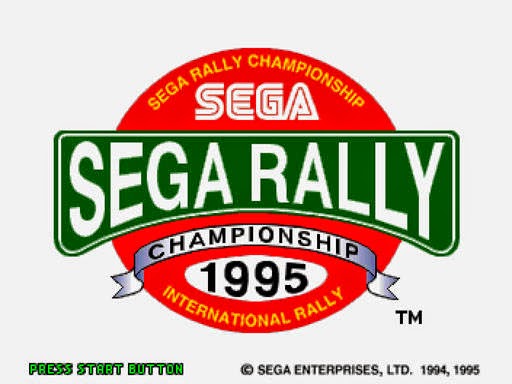
The original Sega Rally Championship hit the arcades in 1995. Building on the foundations of Sega’s past 3D racers, Virtua Racing and Daytona USA, Sega Rally delivered an authentic racing experience to many a gamer, with its textured polygonal graphics, pumping soundtrack and fluid clip. When the news broke out that a Sega Saturn port was in the works, many were skeptical. The Saturn was not known for its 3D prowess, as lackluster ports of Daytona USA and Virtua Fighter proved. Would a port of Sega Rally even be worth it?


For the Saturn, this looks incredible. Oh and that blue banner reads 'Checkpoint.' You can make it out, right?

Turns out the Saturn port of Sega Rally became one of the closest arcade-to-console conversions the Saturn would receive. Sega Rally became a showpiece for the console, showing off how competent its 3D capabilities were and promised that future arcade conversions could be just as close. At one point the game would be included as a pack-in with the console, or at least represented in the pack-in demo disc. Of course all of this greatness would be rendered moot if the game itself wasn’t fun and solid, but Sega Rally was and remains a hallmark of the arcade scene, and one of the overall finest video games of the 1990s.

Everyone’s first experience with Sega Rally is the same. You innocently start up the championship mode, noticing that you only have two cars to choose from: a Lancia Delta and Toyota Celica. You can choose between models with manual or automatic transmission, but that is it. Two cars. There’s not even an option for a different paint job. Oh well, so you pick one and start racing. The first track, Desert, loads fast and the cars’ high acceleration immediately has you going over 100. All of the track’s turns are announced ahead of time, and you’ll pass a few opponent cars, but mostly you’ll be bumping into the walls. You complete a lap, expecting at least two more to go, but the race suddenly ends. That was it, just the one lap, complete in just over a minute, and on to the next course you go. What a strangely quick-moving game, this is.

Barely two minutes in and more than halfway through the game.

You continue to the second course, Forest, and another exhilarating minute later it too is all over. On to course three, Mountain, where even more fun is had until it too, is over after just one lap. Your total time for all three courses is shown on the screen… and the game ends. That’s it, you’re done. You just beat Sega Rally in under four minutes.

However, you probably placed horribly against the opponent cars, and you barely scraped past the time limits. But you’ve seen almost all of what the game offers. How can that be? How could this game, hailed as one of the greatest arcade and Saturn games of all time, be so loved with such little content?! Confused and aghast, you search the other modes the game offers. Practice mode, time attack, multiplayer race, but it’s all still the same two cars and three courses! You go into time attack (or practice, the modes are very similar) to try to squeeze out any replay value you can. You pick your car and return to the Desert stage.

Now that your best times have been saved, the game suddenly starts to mean a lot more than it did before. Racing on the same course over and over this time familiarizes you more with the curves and how to handle each one. You’ll swear that the game is going easier on you by making the car easier to handle, when in reality it’s you actually getting better at the game. Your checkpoint and lap times continually flash on the screen, showing you by the millisecond how much faster or slower you’re going based on your best times, and it’s a triumph to beat your time even by .01. This game that once felt lacking in content, now feels deep and richer than ever before.

And all this came from just one course and one car! Don’t forget, there are two other courses for you to master, and a whole other car with its own handling to learn also! Suddenly you want to stay far away from the championship arcade mode, as you know you are not yet worthy of putting all these courses and times together, with CPU opponents added in to the mix. As you continue to practice the Forest and Mountain courses, you may begin to question why you play games in the first place, as all you’re doing now is going around in circles and beating your own times, millisecond by millisecond. But what accomplishment you feel from this! There are no achievements, no online anything, nothing but you, the track and the timer. And it’s here that the gamer in you begins to blossom. This is video gaming at its finest. It doesn’t matter how crispy the primitive graphics are, that there’s no storyline whatsoever, or that the game still only has two cars and three tracks. Sega Rally is a test of precision that grooms you into a perfectionist, whether you wanted to be one or not. All for the bragging rights of having the top spot on an offline leaderboard, which is always in danger of irreversible deletion when the Saturn’s internal battery dies.

Behold, Lakeside! A track you may never even be good enough to see.

After days, weeks, months of dedication, you feel you are ready to take on the championship mode and aim for first place against the CPU cars. You try, you fail, and you try again. Eventually, you win. You’ve done it! But what’s this that just flashed on the screen? “Try Extra Stage”?! Without warning the game loads a special, hidden fourth stage, Lakeside. This surprise course is even tougher than the ‘expert’ Mountain stage, and with no checkpoints to give you extra time, more likely than not you won’t even be able to complete a full lap. Try and try again you will, and your prize for winning Lakeside reveals itself: a Lancia Stratos. So I stand corrected. make that four tracks and three cars.

With your bragging rights and Sega Rally mastery, what will you walk away from at the very end? Honestly, nothing. As it is for any video game, the fun is not had in the destination but in the journey. (Speaking of that, any gamer that hasn't played Journey (PS3) is no gamer at all.) Unlike MMOs that have you leveling up to infinity with no real end (until they kill the servers), Sega Rally represents what a true game is at its core and shows how much you can have with so little. Many Saturn games operate on this principle of maximizing minimalism, largely because the console couldn't handle much more. Look at Daytona USA, NiGHTS, Virtua Fighter, Panzer Dragoon... all games and series that honestly don't have much flash and abundance. But what they do have is hidden depth and complexity wrapped up in that signature Sega style. They are games that rely on continuous replay to get your score that one point higher, or time one millisecond lower. It's all for your personal satisfaction and little else, but then again, isn't that why we play video games in the first place?

The reason we game, and replay you shall. Over and over again.

6/10/14

Forgotten Gaming- Knuckles' Chaotix


Name- Knuckles’ Chaotix
Platforms- Sega 32X
Developer- Sega
Released- Spring 1995

Buried deep in the pile of mid-90s console rejects, among the 3DO, Atari Jaguar and Apple Pippin, lies an oddity known as the Sega 32X. As the second of the Sega Genesis’ major add-ons, the 32X was designed to enhance the power and performance of the aging 16-bit system in order to keep it relevant during the 32-bit revolution, led by the Sony PlayStation and Sega Saturn. It was shamelessly considered (and marketed as) the poor man’s entry into 32-bit gaming. Although the idea sounds solid: keeping your old Genesis up to speed with new gaming ideas, but in practice nobody wanted to blow $150+ on an add-on that was already set to be obsolete by the Sega Saturn, which was due to release within a year of the 32X. Fewer than 40 games were released for the 32X and despite a sales spike at launch, the add-on sold horribly and quickly became derided by critics and customers. Trust in Sega had been hurt greatly because of the 32X, and now more than ever it was clear that Sega really had no idea how to handle this next gaming generation. The botched 32X release, followed by the slow crash and burn of the Saturn in the following years, gave Sega no choice but to Cast a Dream =P and try to save face with one last console, but that’s another story for another day.

So here we are with Knuckles’ Chaotix, the only Sonic-related game released for the 32X. Ever since the announcement of the new 32-bit consoles, full-3D Sonic games were teased and hinted at, prepping the gaming public for the 32X (and later Saturn) to deliver these immersive experiences. Imagine their disappointment when a Sonic game finally released on 32-bit hardware and it looked like this:

Welcome to the next... level?

Yeah it looks nice, but where’s the 3D? Where’s the nextgen experience only available  thanks to the raw processing power of these new and expensive consoles? And where the hell is Sonic?

Every detail about Knuckles’ Chaotix’s launch and reception at the time was duly unfair. Few people even bothered with a 32X, and the few that did buy or review the game dismissed it as a spruced-up Genesis game with funky physics and a weird bungee gimmick. Even Sega dismissed this game in later years, never re-releasing it as they have with many 90s Sonic games, and deciding to reboot (most of) the Chaotix characters in new games with different roles.

But instead, look at this game from today’s standpoint. Retro gaming is a continuing trend and hobby, and even as the PS4 and Xbox One trudge forward, many gamers are deciding to look back and discover games from a simpler time. Classic Sonic games are particularly more popular than ever, thanks to their re-releases on mobile devices, and gamers are embracing games like SonicCD and turning down recent offerings like Sonic 4. Knuckles’ Chaotix now serves as a bonus offering of sorts for the gamer that loves classic Sonic sidescrolling action, but is looking for a different spin on it (because if Sonic 4 proved anything, it’s that Sega just doesn’t make ‘em like they used to).

Knuckles’ Chaotix is a 2D Sonic game starring fan-favorite Knuckles and his gang known as the Chaotix. Along with Knuckles, the game stars Mighty the Armadillo, Espio the Chameleon, Charmy Bee (no ‘the’), and Vector the Crocodile. Some members of the Chaotix have continued to make appearances in the Sonic universe (Espio, Vector), while others have never been seen again (Mighty). At the start of a game you choose one of the five to play as (and each character has his own unique abilities). However you will also be paired with a second character, and the two of you will be bound together by a bungee-cord ring mechanism. To successfully navigate the stages you will need to properly manipulate your character, take in account your partner, as well as keep in mind the cord that bounds you together. You can command your partner to ‘Hold’ in one place, stretching the cord, then let go to snap into a top speed to clear ramps. You can even pick up and throw your partner, for example throw him to an upper platform and using the bungee to sling you up to join him.

It is an odd mechanic indeed, but the stages are designed to allow room for bungee snapping and precision platforming is kept at a low. Enemies and spikes are rather sparse and there are no death drops to accidentally fall into. The main challenge you will face in the game is simply navigating the stage itself and enjoying all of the eye candy they have to offer. Because let me tell you, Knuckles’ Chaotix is loaded with the most superficial graphics and special effects in any game I’ve ever played. 

Screenshots don't completely portray just how alive this game can be.

In order to show Chaotix as an improvement over its 16-bit cousins, the game includes examples of sprite scaling, rotation and particle effects every single chance it gets. Foreground objects are heavily animated, and background art is left abstract and surreal. Every few levels the time of day changes, altering the color palette and allowing you to play the stages at morning, midday, evening and night. Item boxes no longer just show the item inside once broken, instead the panel flips upward, reveals itself and disintegrates. Collapsible platforms also disintegrate into a million pieces, and the gray rings released by destroyed enemies also explode into particles. Character sprites scale in and out of the foreground when entering a new stage, and if you lose enough rings to an enemy or spike, they will scatter into the screen. Again, none of this is vital to the gameplay and many players won’t even notice half of the graphic tricks, but those that do will appreciate it and in turn, appreciate what the 32X was capable of doing.

Although the 32X performed at its best by simply enhancing what Genesis games could already do, Chaotix’s Special Stages pushed the 32X’s capabilities to their limit. Special Stages took place in giant hexagonal tubes, and running onto the ‘walls’ would reset the center of gravity to make it the new floor. Later stages would open the tubes entirely and  create 3D playfields to navigate (while other playfields would exist on the ‘walls’ allowing unique routes). As you automatically ran forward you would have to collect solitary blue spheres (of Sonic 3 fame), curiously labeled as ‘Limits.’ Winning these stages did not get you a Chaos Emerald but instead a Chaos Ring, going along with the overarching ring theme throughout the game. Although the ‘3D’ was mostly sprite-scaling trickery, it still created a convincing effect and begged the question of what a Sonic game would be like created entirely out of these stages.

Flat-shaded polygons FTW.

Classic Sonic games can be known for being on the short side, luckily for Knuckles’ Chaotix that is not the case. In yet another way of being cool and different than the original Genesis games, Chaotix always starts you off in Newtrogic High, the game’s hub zone. Here is where you can select/change your partner in a slightly rigged claw machine setup, as well as learn your next stage. Chaotix has five zones with five levels each, totaling 25 stages, not including the Special Stages and introductory/tutorial stages. However, in a unique twist, the order you progress through the zones is randomized. A roulette at the end of Newtrogic High will cycle through icons of the five zones: Botanic Base, Speed Slider, Marina Madness, Techno Tower and Amazing Arena, and by hitting a bumper the roulette slows and lands on one of the stages, which you are then rocketed to. This gives Chaotix the ‘never the same game twice’ feel that is so helpful toward replayability.

The 32X was known for its graphical boosting power, but left the Genesis’ sound capabilities relatively untouched. That considered, Chaotix has a soundtrack that is simply one of the best in the series. And not only is the music great, but the sound test in which to hear it on is an audiophile’s dream. Chaotix’s sound test shows you every single sound channel as well as the notes being played on a keyboard, all in real time. As odd as it sounds, you will never look at a sound test the same way again.

As for zone variety, Botanic Base is a lush greenhouse of flora and fountains. Speed Slider is the carnival stage for the game and (appropriately enough) offers some of the fastest speeds you’ll reach. Marina Madness is the game’s water-less water level =P, and Techno Tower has you progressively scaling a large, uh… techno tower. Amazing Arena changes things a bit, requiring you to find and activate a large clock. Activating the clock ‘turns on’ the arena and powers the various level features necessary to properly finish the stage. And not to give too much away, but after finishing all five levels of a zone, the level icon in Newtrogic High will deactivate. When all five icons are deactivated, the stage becomes set for a clever endgame starring our favorite Sonic doppelgänger… 

Coolest title cards in a Sonic game. EVER.

Knuckles’ Chaotix also earns the title for the most diverse selection of power-up items. Sonic aficionados are well-versed in the item monitors littered throughout game stages, though most of those items were boring ring bonuses, shields, and invincibility. Chaotix ups the item game considerably, retaining all of the classic items but adding new ones that drastically change gameplay. The very first power-up you come across is a growth power-up that increases your player’s size. At first this just looks like an excuse to show off the 32X’s sprite-scaling, you’ll notice that when large your momentum and force are greatly enhanced. Your jump and snapback remain more powerful until the power runs out and you return to normal size. Likewise you will find a shrink power-up (more like power-down) that makes you minuscule and removes any strength you may have in your snap to make it up that huge hill. Other power-ups swap control from yourself to your partner, or even temporarily change your partner to whoever’s face is showing on the monitor. Perhaps the most interesting power-up is the blue ring, which consolidates your ring total into a single giant ring if you get hit by an enemy. Reclaiming that single ring will give you your complete ring total back, though not grabbing it fast enough will spew out all of your rings with your only hope that you can get back at least a few of them. This is a very cool mechanic that unfortunately has yet to make a return appearance.

So is Knuckles’ Chaotix for you? Well, let’s see. If you happen to actually own a 32X, then yes definitely, because there’s barely anything else to play on it =P. If you do not, your only real alternative is emulation, as this game hasn’t been re-released on any other console. If you love the original Sonic games and are looking for something new and fresh from an old bygone era, definitely give it a try. However if Sonic was never your thing, Chaotix may just confuse you into submission. The bungee mechanic does have a learning curve, but once you align your thinking, you’ll be bouncing and throwing and snapping like a pro. Compare it to thinking with portals, only here it’s bungee rings.